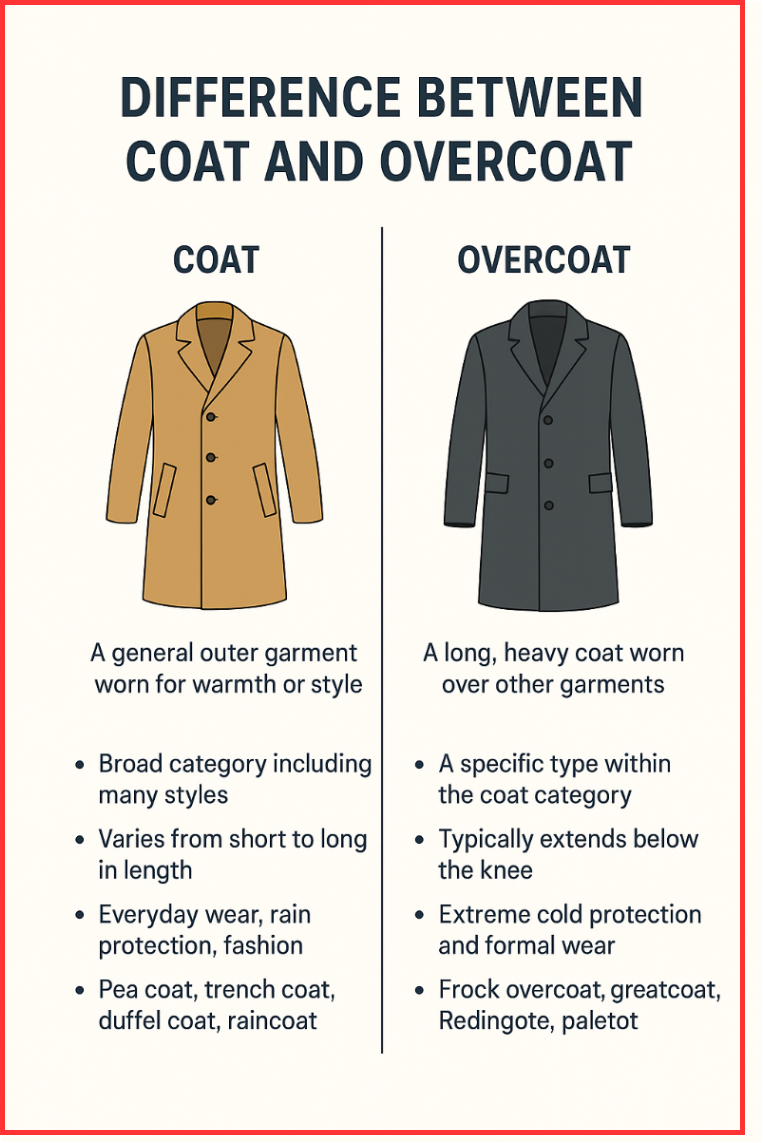
Coats are essential wardrobe garments designed for warmth, style, or both. When discussing winterwear, the Difference Between Coat and Overcoat often confuses many people. The key difference between a coat and an overcoat is that a coat is a general outerwear category worn for warmth or style, whereas an overcoat is a specific type of long, heavy coat worn over other clothing, mainly for winter protection
Overview and Key Difference
A coat is a versatile outer garment worn by individuals for style, modesty, or insulation against cold weather. Overcoats, however, are a special category of long, heavy coats worn primarily in harsh winter conditions.
The key difference is that all overcoats are coats, but not all coats are overcoats.
What is a Coat?
A coat is an upper-body garment designed to be worn over regular clothing for warmth or fashion. Coats generally come with long sleeves, front openings, and closures such as buttons, zippers, toggles, or belts. Their length can vary from the hips to below the knees.
Historically, coats were classified as undercoats and overcoats, but in modern fashion, the word “coat” mostly refers to long outerwear pieces.
Today, coats come in various styles, materials, and lengths, making them suitable for different climates and fashion trends.
Popular Types of Coats
1. Pea Coat
A short, double-breasted wool coat with large buttons and broad lapels, commonly worn by sailors.
2. Trench Coat
A military-inspired, double-breasted raincoat, often made in khaki and designed for wind and rain protection.
3. Raincoat
A waterproof or water-resistant coat worn to protect against rain.
4. Duffel Coat
A thick woolen coat made of duffel fabric, featuring a hood and toggle fastenings.
What is an Overcoat?
An overcoat is a long, heavy coat designed to be worn over other clothing layers, especially during extremely cold weather. They extend below the knees for added warmth and are typically made of wool, cashmere, tweed, camel hair, or heavy blends.
Overcoats are often confused with topcoats, but the difference lies in length—topcoats are slightly shorter. Both fall under the broader category of outer coats.
Common Types of Overcoats
1. Greatcoat
A heavy, military-style overcoat featuring shoulder capes and a bulky structure, traditionally used by European soldiers.
2. Redingote
A long, elegant fitted coat for people of all genders, inspired by 18th-century riding coats.
3. Frock Overcoat
A formal daytime overcoat with a waist seam, worn with formal attire.
4. Paletot Coat
A shaped, tailored overcoat with side bodies—a stylish yet less formal alternative to the frock overcoat.
Key Difference between Coat and Overcoat
| Feature | Coat | Overcoat |
| Definition | A garment worn for style or warmth over clothing. | A long, heavy coat worn over other garments for winter protection. |
| Category | Broad category including many styles. | A specific type within the coat category. |
| Length | Varies from short to long. | Typically extends below the knees. |
| Purpose | Everyday wear, rain protection, fashion. | Extreme cold protection and formal wear. |
| Examples | Pea coat, trench coat, duffel coat, raincoat. | Frock overcoat, greatcoat, Redingote, paletot. |
| Material | Wool, cotton, blends, waterproof fabrics. | Heavy wool, fur, cashmere, tweed. |
Summary
The Difference Between Coat and Overcoat lies in their design and purpose. A coat is a general outer garment worn for warmth or fashion, while an overcoat is a specific, long, heavy winter coat meant to be worn over other layers in cold weather. All overcoats fall under the coat category, but not every coat qualifies as an overcoat. Understanding this distinction helps you choose the right winterwear based on climate, comfort, and style.
Read Next: