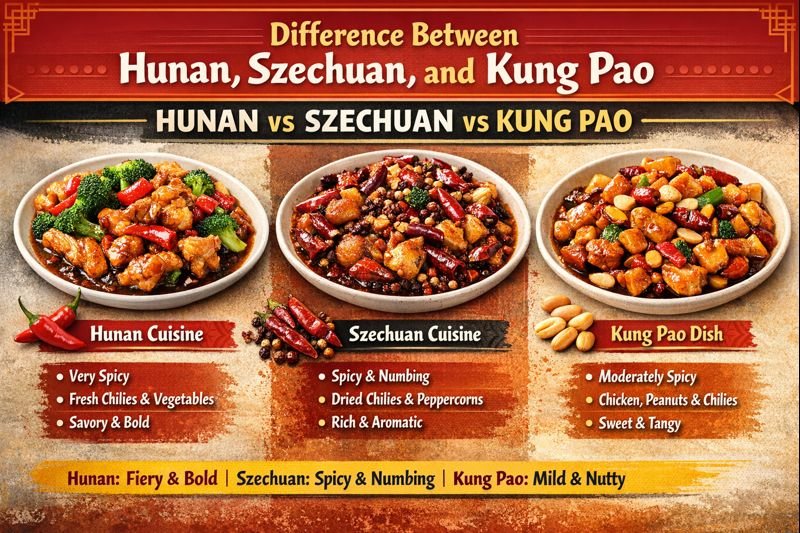
- Difference Between Hunan, Szechuan, and Kung Pao: Hunan and Szechuan are regional Chinese cuisines, while Kung Pao is a specific dish that originates from Szechuan cuisine.
- Hunan Cuisine Characteristics: Hunan dishes are known for intense heat, bold flavors, and the use of fresh chilies, making them spicier and more direct than Szechuan food.
- Szechuan Cuisine Flavor Profile: Szechuan cuisine features the famous “ma la” taste, combining spicy heat with a numbing sensation from dried chilies and Szechuan peppercorns.
- Kung Pao Dish Overview: Kung Pao is a classic Szechuan dish made with chicken, peanuts, and dried chilies, offering a slightly sweet, tangy, and nutty flavor.
- Hunan Chicken vs Kung Pao Chicken: Hunan chicken is hotter and more vegetable-rich, while Kung Pao chicken is milder, nuttier, and slightly sweet.
- Overall Spice Comparison: In hunan vs szechuan vs kung pao, Hunan is the hottest, Szechuan is complex and numbing, and Kung Pao is the most balanced option.
Understanding the Difference Between Hunan, Szechuan, and Kung Pao can be confusing because all three are spicy Chinese dishes commonly found in Western Chinese restaurants. Hunan and Szechuan are regional Chinese cuisines, while Kung Pao is a specific dish that comes from Szechuan cuisine. Although they share heat and bold flavors, their ingredients, spice profiles, and cooking styles set them apart.
Chinese food has been adapted heavily outside China, and dishes like Hunan chicken, Szechuan chicken, and Kung Pao chicken are often seen as interchangeable. However, when you compare hunan vs szechuan vs kung pao, the differences become clear in flavor, texture, and preparation.
What Is Hunan Cuisine?
Hunan cuisine originates from China’s Hunan province and is known for its intense heat and bold, smoky flavors. Unlike Szechuan cuisine, Hunan dishes rely heavily on fresh chili peppers, giving them a sharper and more direct spiciness.
In Western restaurants, Hunan cuisine is most commonly represented by Hunan chicken. When comparing hunan vs kung pao chicken, Hunan chicken is usually spicier, less sweet, and packed with vegetables like broccoli, carrots, and bell peppers. The sauce is darker and more savory, often made with soy sauce and chili paste.
Key traits of Hunan cuisine:
- Uses fresh chilies instead of dried or processed ones
- Spicier and less numbing than Szechuan
- More vegetables and stronger savory flavors
- Stir-fried quickly over high heat
What Is Szechuan Cuisine?
Szechuan (or Sichuan) cuisine comes from the Sichuan province of China and is famous for its “ma la” flavor, which combines heat and numbing sensations. This unique taste comes from Szechuan peppercorns, a key difference when comparing szechuan vs hunan vs kung pao.
Szechuan chicken is spicy, but the heat feels different from Hunan dishes. Instead of sharp chili heat, it delivers a tingling numbness along with layers of garlic, ginger, chili oil, and fermented sauces.
When looking at hunan vs szechuan, Hunan food tends to feel hotter, while Szechuan food feels more complex and aromatic.
Key traits of Szechuan cuisine:
- Uses dried chilies and peppercorns
- Spicy with a numbing sensation
- Rich in garlic, ginger, and chili oil
- Less vegetable-heavy than Hunan
What Is Kung Pao?
Kung Pao is not a cuisine—it is a specific dish that originated in Szechuan cuisine. This is an important distinction when comparing kung pao vs hunan or hunan vs kung pao chicken.
Kung Pao chicken features diced chicken stir-fried with peanuts, dried chilies, and vegetables in a slightly sweet, tangy brown sauce. The crunch of peanuts is what separates it from both Hunan and Szechuan chicken dishes.
When comparing kung pao chicken vs hunan chicken, Kung Pao is milder, slightly sweet, and nuttier, while Hunan chicken is hotter and more savory.
Key traits of Kung Pao:
- A single dish, not a regional cuisine
- Contains peanuts for crunch
- Slightly sweet and tangy flavor
- Less spicy than Hunan chicken
Hunan Chicken vs Kung Pao Chicken
The debate around hunan chicken vs kung pao chicken is common because both are spicy chicken stir-fries. However, their flavor profiles differ greatly.
- Hunan chicken: Very spicy, vegetable-heavy, bold chili heat
- Kung Pao chicken: Moderately spicy, nutty, slightly sweet
If you enjoy intense heat, Hunan chicken is the better choice. If you prefer balanced spice with texture, Kung Pao chicken is ideal.
Kung Pao vs Hunan: Which Is Hotter?
When comparing kung pao vs hunan, Hunan dishes are generally hotter. Kung Pao focuses more on flavor contrast—sweet, salty, spicy, and crunchy—while Hunan dishes aim for pure chili heat.
Difference Between Hunan, Szechuan, and Kung Pao: Comparison Table
| Feature | Hunan | Szechuan | Kung Pao |
| Type | Regional cuisine | Regional cuisine | Specific dish |
| Origin | Hunan Province, China | Sichuan Province, China | Sichuan cuisine |
| Popular Chicken Dish | Hunan chicken | Szechuan chicken | Kung Pao chicken |
| Spice Level | Very spicy | Spicy with numbing effect | Moderately spicy |
| Type of Heat | Sharp, direct chili heat | Numbing and spicy (ma la) | Balanced heat |
| Key Ingredients | Fresh chilies, vegetables | Dried chilies, peppercorns | Peanuts, dried chilies |
| Sauce Flavor | Savory and bold | Rich and aromatic | Slightly sweet and tangy |
| Texture | Soft chicken, crisp vegetables | Tender meat, oily sauce | Soft chicken, crunchy peanuts |
| Sweetness Level | Low | Low to medium | Medium |
Takeaways
- Hunan vs Szechuan vs Kung Pao: Hunan is the hottest, Szechuan is spicy and numbing, and Kung Pao is the mildest with a nutty crunch.
- Hunan chicken vs Kung Pao chicken: Hunan chicken is spicier and more vegetable-forward, while Kung Pao chicken is sweeter with peanuts.
Conclusion
The Difference Between Hunan, Szechuan, and Kung Pao lies in their origins and flavor profiles. Hunan and Szechuan are regional cuisines, each with distinct spice styles, while Kung Pao is a well-known Szechuan dish. When comparing hunan vs szechuan vs kung pao, Hunan is the hottest, Szechuan is complex and numbing, and Kung Pao is balanced with peanuts and mild sweetness. Knowing these differences helps you choose the perfect dish based on your spice tolerance and taste preference.
Read Next: