The difference between benevolent and malevolent is that benevolent refers to someone who is kind, generous, and wishes to do good, while malevolent describes someone who is cruel, harmful, and wishes to do evil or cause suffering.
In simple words, benevolent = good intentions, and malevolent = bad intentions.
Meaning of Benevolent
Benevolent is used to describe a person, action, or intention that is kind, helpful, and motivated by goodwill.
A benevolent person cares for others and wants to improve their well-being.
Benevolent- Etymology
The etymology of “benevolent” traces back to Latin:
- Latin roots: bene (meaning “well” or “good”) + volent- from velle (meaning “to wish”)
- Original meaning: “Wishing well” or “well-wishing”
- Evolution: The term entered English in the late 14th century as benevolent, keeping the sense of goodwill, kindness, and desire to do good to others.
So, literally, a benevolent person is one who wishes well for others.
Sentence Examples of Benevolent
- The benevolent teacher stayed after class to help struggling students.
- A benevolent donor paid for the school library renovation.
- His benevolent smile made everyone feel safe and welcomed.
- The organization is known for its benevolent missions to support those in need.
- She acted in a benevolent way by helping her older neighbor with groceries.
Benevolent Attributes
Benevolent individuals are guided by kindness and genuine care for others. They often show empathy, meaning they can understand and share the feelings of people around them. This emotional awareness helps them offer support in meaningful ways. Such people are also generous with their time, effort, and resources. Whether helping a neighbor, volunteering, or donating quietly, their actions are driven by sincerity rather than the desire for praise.
Another important trait of benevolent people is their positive mindset. They focus on hope, encouragement, and improvement. Their uplifting attitude inspires others and often creates a friendly and supportive environment. Additionally, benevolent individuals tend to be humble. They do not boast about their good deeds; instead, they help simply because they believe it is the right thing to do.
Meaning of Malevolent
Malevolent refers to a person or action that is harmful, evil, or intentionally damaging.
A malevolent person enjoys causing pain, trouble, or destruction.
Malevolent Etymology
The etymology of “malevolent” comes from Latin as well:
- Latin roots: male (meaning “badly” or “evil”) + volent- from velle (meaning “to wish”)
- Original meaning: “Wishing evil” or “ill-wishing”
- Evolution: The word entered English in the late 14th century as malevolent, keeping the sense of having harmful intentions or wishing harm to others.
In short, while benevolent literally means “wishing well,” malevolent literally means “wishing ill.”
Sentence Examples of Malevolent
- The villain in the movie had a malevolent plan to destroy the city.
- His malevolent remarks were meant to hurt her feelings.
- The malevolent look in his eyes made everyone step back.
- Rumors spread by malevolent people can ruin reputations.
- The story described a malevolent spirit haunting the old house.
Malevolent Attributes
Malevolent individuals display harmful intentions and often enjoy causing discomfort or distress. They typically lack empathy and may ignore or dismiss the emotions of others. Their actions may involve manipulation, deceit, or aggression to achieve personal benefits. This behavior creates tension, mistrust, and conflict in relationships.
Malevolent people often carry a negative worldview, filled with suspicion and resentment. They may appear arrogant or self-centered, believing their needs are more important than others’. Their impatience and intolerance make it difficult for people around them to feel supported or valued. Such behavior leads to isolation and damaged relationships over time.
Key Differences Between Benevolent and Malevolent
| Feature | Benevolent | Malevolent |
| Meaning | Good, kind, helpful intentions | Evil, harmful, destructive intentions |
| Nature | Positive | Negative |
| Impact on Others | Helps, supports, uplifts | Hurts, damages, creates fear |
| Emotional Tone | Warm and gentle | Dark and threatening |
| Example Word Use | Benevolent leader | Malevolent villain |
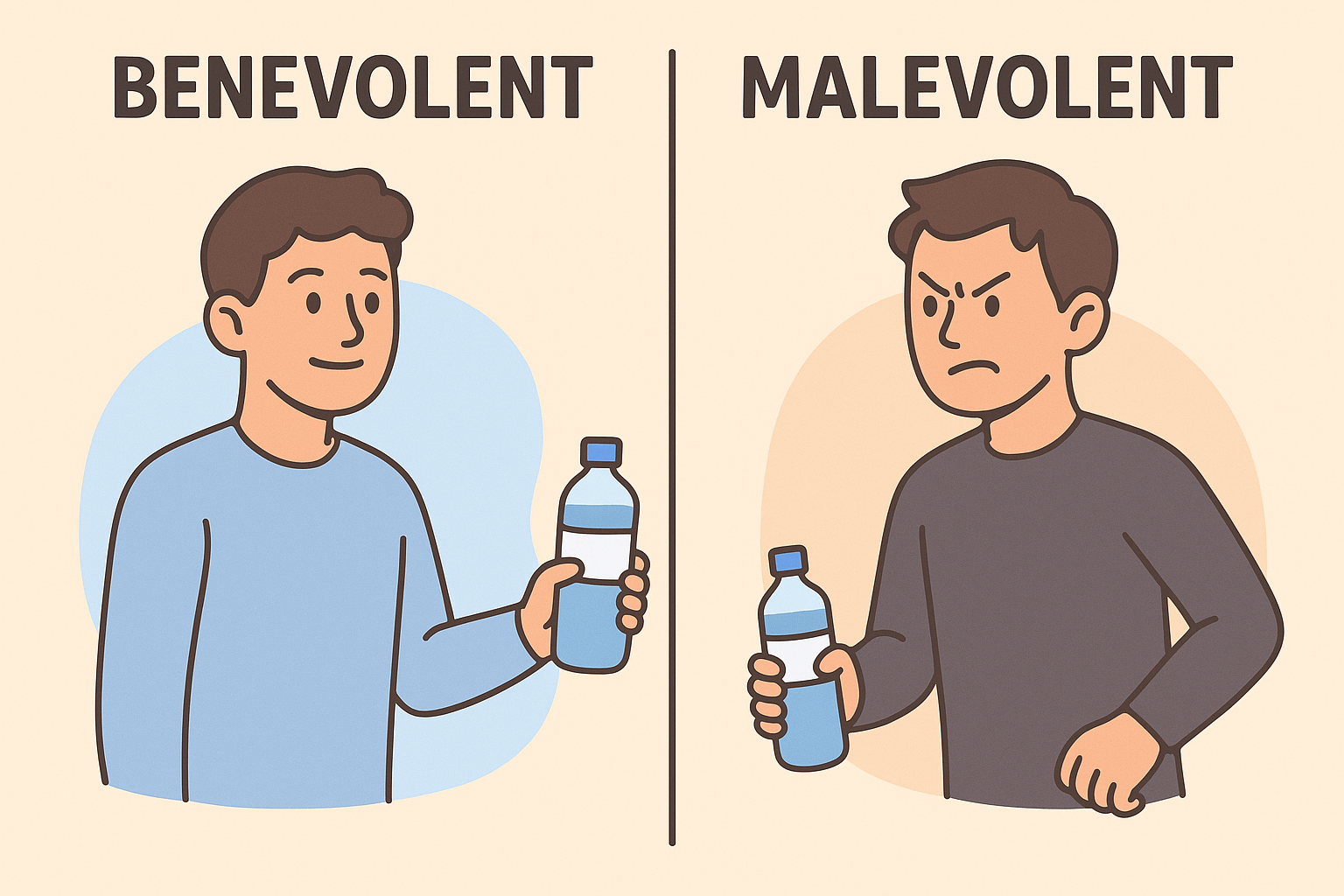
Easy Illustration to Understand the Difference
Malevolent: A person sees someone thirsty and hides the water on purpose.
Story: The Two Brothers- Benevolent vs Benevolent
Varun, however, had a malevolent heart. He enjoyed seeing others struggle. When he saw Arin helping the villagers, he would hide the buckets or spill the water just to cause trouble. Varun liked to see people upset because it made him feel powerful. His actions brought fear and sadness to the village.
One day, a heavy storm damaged many homes. Arin worked day and night to repair roofs and give food to families. Varun did nothing; instead, he laughed when people cried about their losses.
The villagers soon understood the truth. Arin’s benevolent nature brought unity, trust, and peace, while Varun’s malevolent behavior created pain and distance.
Over time, people respected Arin with love, while Varun was left alone — proof that good intentions build relationships, while harmful intentions destroy them.
Conclusion
Understanding the difference between benevolent and malevolent helps us identify the intentions behind people’s actions. While benevolent behavior spreads kindness and compassion, malevolent behavior causes harm and negativity. Choosing benevolence builds trust, peace, and stronger relationships in society.
Read Next: