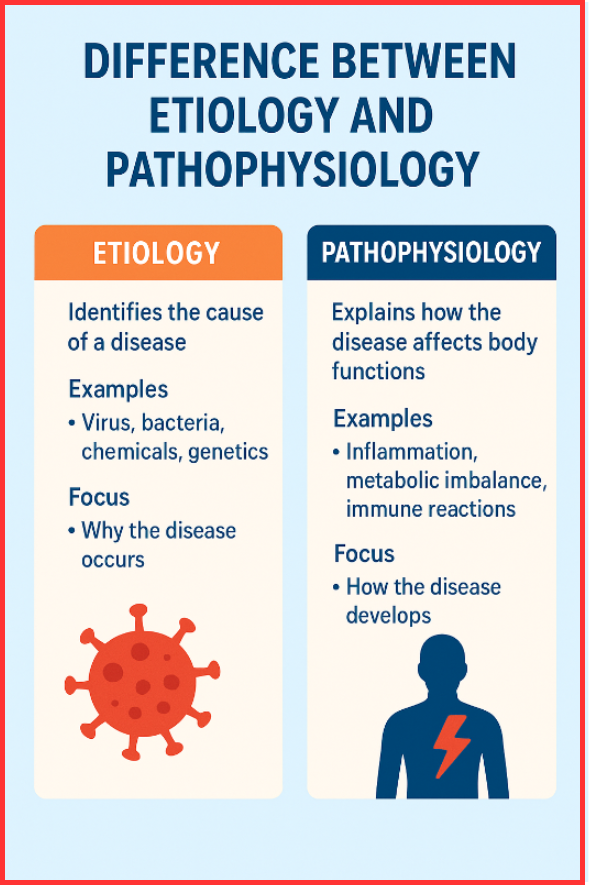
The difference between etiology and pathophysiology lies in their focus: etiology explains the root cause of a disease, while pathophysiology explains how that disease affects the body’s normal functions. In simple terms, etiology tells you “why” a disease occurs, and pathophysiology tells you “how” the disease develops and progresses inside the body. Understanding both helps doctors diagnose conditions accurately and choose the right treatment.
What is Etiology?
Etiology refers to the cause or origin of a disease. It identifies what triggers a disorder, whether internal or external.
Types of Causes in Etiology
A disease may arise from one or several of the following factors:
1. Biological Causes
These include microbes and parasites such as:
- Bacteria (e.g., Streptococcus causing strep throat)
- Viruses (e.g., influenza virus)
- Fungi (e.g., Candida)
- Protozoa and helminths
2. Chemical Causes
Exposure to harmful chemicals can trigger diseases:
- Carcinogens causing cancer
- Toxins causing poisoning
- Industrial pollutants
3. Physical or Environmental Causes
Examples include:
- Radiation exposure
- Extreme temperatures
- Pollution
4. Genetic Causes
Many diseases occur due to:
- Mutations
- Hereditary disorders
- Single nucleotide polymorphisms (SNPs)
5. Psychological Causes
Stress and mental strain may contribute to:
- Anxiety disorders
- Psychosomatic illnesses
Importance of Identifying Etiology
Knowing the etiology helps in:
- Selecting the correct treatment
- Preventing disease spread (especially infectious diseases)
- Developing vaccines and medicines
How Etiology is Determined
Medical professionals use:
- Laboratory culture tests
- Imaging techniques
- Biochemical tests
- Genetic testing
These methods help identify the exact cause behind the disease.
What is Pathophysiology?
Pathophysiology refers to the functional and physiological changes that occur in the body due to a disease. It connects the disease cause to the symptoms seen in a patient.
What Pathophysiology Focuses On
1. Altered Body Functions
Example changes include:
- Inflammation
- Hormonal imbalances
- Disturbed electrolyte levels
2. Immune System Response
The body may initiate:
- Fever
- Antibody production
- Inflammatory pathways
3. Behavior of Disease-Causing Agents
For infectious diseases, pathophysiology studies:
- How viruses replicate inside cells
- How bacteria invade tissues
- How parasites damage organs
4. Progression of Disease
It explains:
- Why symptoms appear
- How complications develop
- Why some patients deteriorate faster
For example:
- In dengue, falling platelet count explains bleeding issues.
- In diabetes, long-term high blood sugar explains nerve and kidney damage.
How Pathophysiology is Diagnosed
Doctors rely on:
- Biochemical tests
- Immunological tests
- Molecular diagnostics
- Imaging studies
These tests show how the disease is altering normal body function.
Similarities Between Etiology and Pathophysiology
Both:
- Explain essential aspects of disease biology
- Require laboratory tests and clinical research
- Help doctors diagnose and treat illnesses
- Are important in medical research and drug development
Etiology vs Pathophysiology (Tabular Form)
| Feature | Etiology | Pathophysiology |
| Definition | Identifies the cause of a disease | Explains how the disease affects body functions |
| Focus | “Why” the disease occurs | “How” the disease develops |
| Examples | Virus, bacteria, chemicals, genetics | Inflammation, metabolic imbalance, immune reactions |
| Role in Medicine | Helps identify treatment and prevention | Helps understand symptoms and progression |
| Diagnostic Methods | Cultures, genetic tests, imaging | Biochemical tests, immune tests, molecular analysis |
Summary – Difference Between Etiology and Pathophysiology
The difference between etiology and pathophysiology highlights two key pillars of disease understanding.
- Etiology identifies the root cause of a disease.
- Pathophysiology explains how the disease alters normal body functions.
Both are essential because effective treatment depends on knowing why a disease occurs and how it behaves inside the body.
Reference:
1.“Pathophysiology.” Pathophysiology – an overview | ScienceDirect Topics.
2.“Etiology.” Wikipedia, Wikimedia Foundation, 1 Feb. 2018.
3.“Pathophysiology.” Wikipedia, Wikimedia Foundation, 28 Jan. 2018.
Read Next: