The Difference Between Integrity and Dignity is that integrity refers to a person’s honesty, moral principles, and consistency of character, while dignity refers to a person’s sense of self-worth, respect, and inherent value.
In simple words, integrity = doing what is right, and dignity = feeling worthy and deserving of respect.
Meaning of Integrity
Integrity means being honest, trustworthy, and consistent in actions, even when no one is watching.
A person with integrity follows moral principles, keeps promises, and takes responsibility for their choices.
Integrity is often seen as the foundation of strong character because it drives people to do what is right rather than what is easy.
Integrity – Etymology
The word “integrity” originates from Latin:
- Latin root: integer, meaning “whole, complete, untouched”
- Original sense: “purity, wholeness, moral soundness”
- Evolution: It entered English in the mid-15th century meaning “innocence, blamelessness, uprightness.”
So, integrity literally refers to a person who is whole and unbroken in moral character.
Sentence Examples of Integrity
- She showed integrity by admitting her mistake during the audit.
- A leader with integrity keeps their promises even during difficult times.
- His integrity made him the most trusted member of the team.
- Integrity is essential for building long-term professional relationships.
- He returned the lost wallet to its owner, proving his integrity.
Integrity Attributes
People with integrity usually:
- Stay honest even under pressure
- Follow ethical and moral principles
- Keep promises and commitments
- Own their actions and accept accountability
- Respect others’ rights and boundaries
- Maintain consistency between their words and actions
Integrity inspires trust and creates a reliable, positive environment around the person.
Meaning of Dignity
Dignity refers to a person’s inherent value, self-respect, and sense of worthiness.
It is the understanding that every human deserves respect regardless of status, age, or background.
A person with dignity behaves respectfully toward themselves and others. They protect their self-worth and do not allow mistreatment or humiliation.
Dignity – Etymology
The word “dignity” comes from Latin:
- Latin root: dignitas, meaning “worthiness, honor, respect”
- Original sense: “noble character or elevated rank”
- Evolution: It entered English in the 13th century to describe honor, self-respect, and the value of a person.
So, dignity literally refers to a quality of being worthy and respected.
Sentence Examples of Dignity
- She faced the challenges with dignity and calmness.
- Every human deserves dignity, regardless of their circumstances.
- He refused to engage in arguments that would compromise his dignity.
- The organization works to protect the dignity of older people.
- Her dignity remained intact even when she confronted criticism.
Dignity Attributes
People who value dignity often:
- Respect themselves and others
- Maintain self-control during difficult situations
- Stand against humiliation or disrespect
- Value equality and human rights
- Speak and act gracefully
- Create an atmosphere of mutual respect
Dignity is essential for emotional well-being and healthy interpersonal relationships.
Key Differences Between Integrity and Dignity
| Feature | Integrity | Dignity |
| Meaning | Moral honesty, ethical principles, consistency | Self-worth, respect, and inherent human value |
| Focus | Doing what is right | Feeling worthy and respected |
| Origin | Internal moral compass | Internal + external recognition |
| Influence | Builds trust and moral credibility | Builds confidence and self-respect |
| Example Use | Integrity in leadership | Dignity in behavior or treatment |
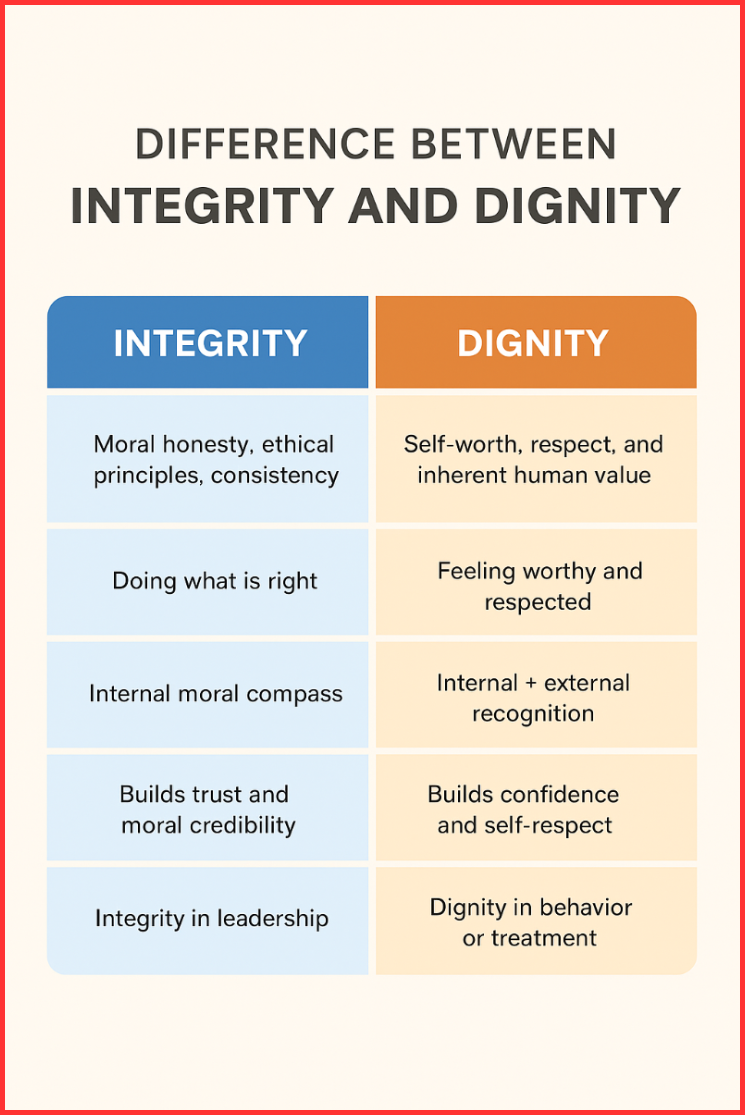
Easy Illustration to Understand the Difference
Integrity:
A person returns extra change received at a store because it is morally right.
Dignity:
A person refuses to be spoken to disrespectfully because they value their self-worth.
Story: The Two Workers – Integrity vs Dignity
At a manufacturing company, two workers, Tom and Jerry, were known for very different but equally valuable qualities.
Tom was admired for his integrity. Whenever a machine malfunctioned, he reported it honestly—even if it meant extra work or production delays. He never exaggerated his performance or hid mistakes. Because of this, everyone trusted his judgment. If a situation required fairness, Tom was always the person people turned to.
Jerry, on the other hand, was known for his strong sense of dignity. He consistently stood up for himself and for others. If anyone spoke rudely to junior staff, Jerry stepped in and insisted on respectful behavior. He made sure no one felt humiliated or belittled in the workplace.
One day, a major error occurred in the assembly line. Since Tom had overseen that section, he immediately took responsibility. His integrity prevented the issue from escalating further. Meanwhile, Jerry ensured that during the internal investigation, everyone was treated with respect and no one was unfairly blamed.
In the end, the company realized an important truth:
Tom’s integrity built trust, and Jerry’s dignity built respect.
Together, they helped create a stronger, healthier workplace culture.
Conclusion
Understanding the Difference Between Integrity and Dignity helps us appreciate the values that shape human behavior. While integrity guides us to act with honesty and moral strength, dignity reminds us of our worth and the respect we owe ourselves and others.
Together, these qualities build character, strengthen relationships, and create a more respectful society.
Read Next: