The Difference Between Landforms and Landscape lies in their scope and composition. A landform is a single natural feature, such as a mountain, valley, or plateau. In contrast, a landscape is the overall view of an area, combining multiple landforms along with vegetation, water bodies, and human-made structures.
In short: landforms are individual features, landscapes are the bigger picture. Keep reading to explore types, examples, and how these features shape the Earth’s surface.
What Are Landforms?
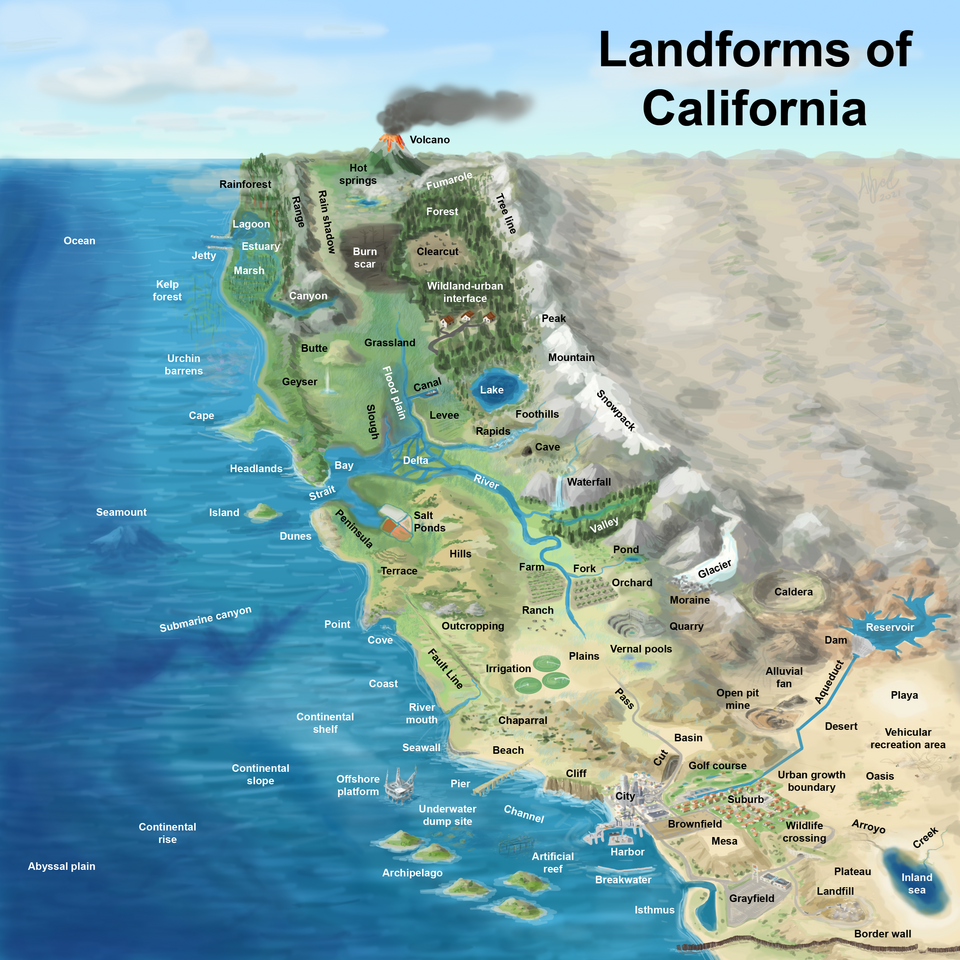
A landform is a natural feature that shapes the Earth’s surface. These features form over millions of years through geological processes like:
- Tectonic activity – Uplifts mountains and plateaus.
- Erosion and weathering – Carves valleys, canyons, and cliffs.
- Deposition – Creates plains, deltas, and sand dunes.
Major Types of Landforms
- Mountains – High, elevated areas like the Himalayas.
- Plains – Flat or gently rolling lands suitable for agriculture.
- Plateaus – Elevated flat regions such as the Deccan Plateau.
- Hills – Smaller elevations, e.g., the Aravalli Hills.
- Valleys and Canyons – Formed by rivers or glacial activity, e.g., the Grand Canyon.
Famous Examples
- Mount Everest – Highest landform at 8,848 meters.
- Grand Canyon – Carved by the Colorado River over 6 million years.
- Mariana Trench – Deepest undersea landform at 11,000 meters below sea level.
Note: Landforms exist both on land and under the ocean, including ridges, trenches, and basins.
What Is a Landscape?
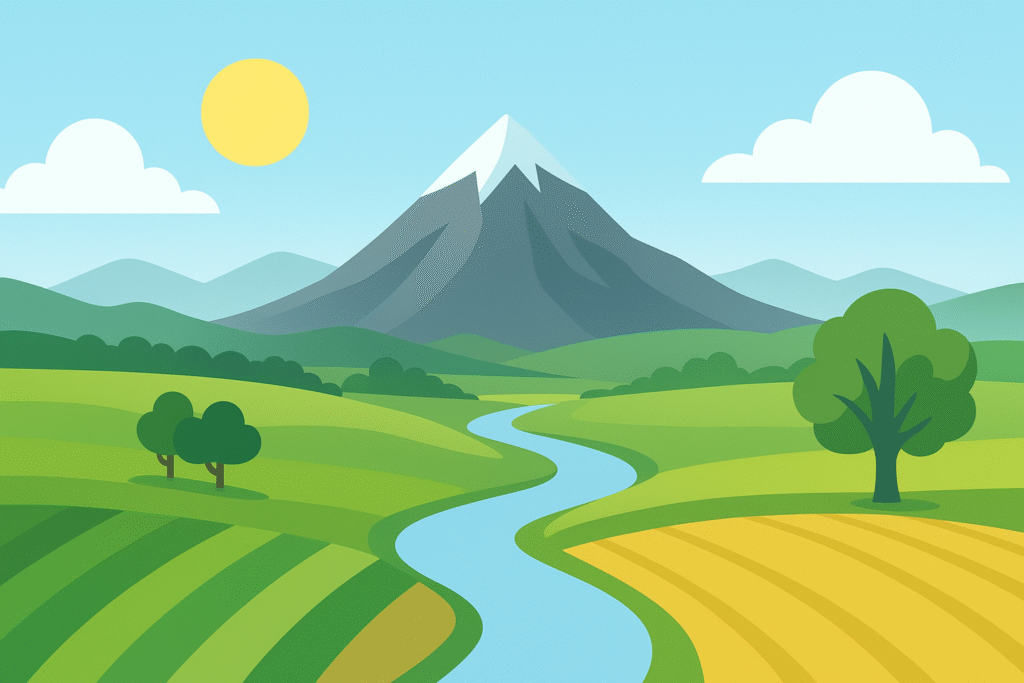
A landscape is the visible section of the Earth’s surface, encompassing landforms, water bodies, vegetation, and human-made structures.
The term originates from the Dutch word landschap, initially used for paintings of the countryside. Today, geographers use it to describe real-world areas.
Types of Landscapes
- Natural Landscape – Formed by nature, including mountains, rivers, forests, and deserts.
- Example: Sahara Desert – Sand dunes and rocky areas.
- Cultural Landscape – Modified or created by humans, including cities, farms, and industrial zones.
- Example: New York City skyline – Combination of urban structures and natural water bodies.
Key Elements
A landscape includes:
- Landforms (mountains, hills, plains)
- Water bodies (lakes, rivers, oceans)
- Vegetation (forests, grasslands)
- Human-made features (roads, buildings, farms)
Similarities Between Landforms and Landscapes
- They Both describe the physical appearance of the Earth’s surface.
- Both are shaped by natural processes like erosion, weathering, and tectonic activity.
- Both evolve over time due to environmental changes and human activities.
Difference Between Landforms and Landscape (Comparison Table)
| Aspect | Landform | Landscape |
| Definition | A single natural feature of the Earth. | Overall view of an area combining landforms, vegetation, and human elements. |
| Scope | Focuses only on natural features. | Broader, includes natural and human-made features. |
| Types | Mountains, hills, plateaus, plains, valleys. | Natural landscapes and cultural landscapes. |
| Formation | Formed by geological processes. | Shaped by nature and human activities. |
| Examples | Mount Everest, Grand Canyon, Nile Valley. | Sahara Desert, Himalayan region, New York City skyline. |
Summary
The Difference Between Landforms and Landscape is simple:
- Landforms – Individual natural features created by geological processes.
- Landscapes – Broader visual areas that include multiple landforms, vegetation, water bodies, and human structures.
Every landscape contains landforms, but not every landform forms a landscape by itself.
FAQs: Difference Between Landforms and Landscape
A desert is a landscape, composed of multiple landforms like dunes and plateaus, along with vegetation and settlements.
Yes, an island is a natural landform, e.g., Sri Lanka, Greenland, Hawaii.
On land: Dead Sea (430 meters below sea level).
Underwater: Mariana Trench (11,000 meters deep).
Sahara Desert, Scottish Highlands, Great Barrier Reef, Tuscany countryside.
References
- National Geographic – Landforms
- National Geographic Education – Landscape
Image Courtesy:
- “Landforms of California – By Alfred Twu – Own work (CC BY-SA 4.0) via Commons Wikimedia
Read Next: