The difference between frills and ruffles lies in their structure: frills have a softer, relaxed, flowing appearance, while ruffles feature tighter gathers that form a more defined, dramatic wave-like shape. Both are popular decorative elements in fashion and interior design, but each brings a distinct visual character to garments and accessories.
This guide provides a clear comparison between frills and ruffles, their uses, similarities, and how they differ in structure, style, and application.
What Are Frills?
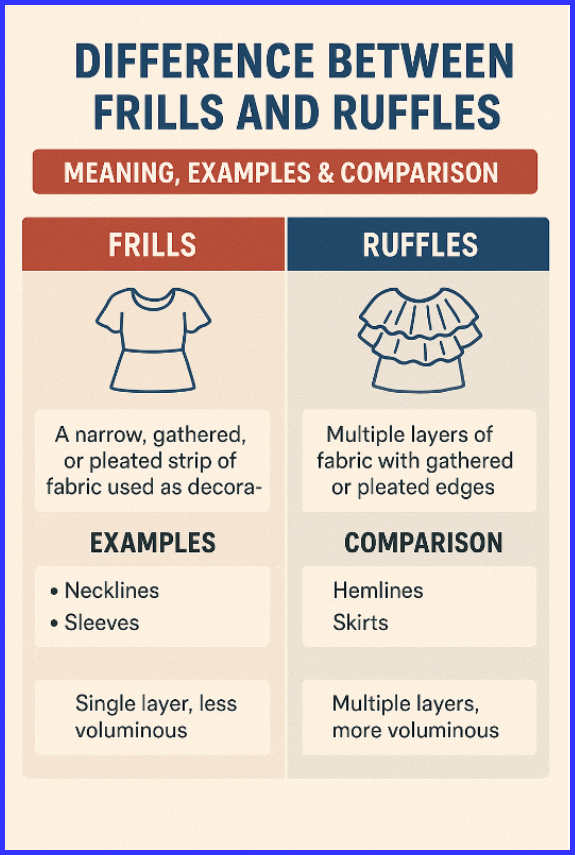
Frills are decorative strips of fabric that are loosely gathered or pleated to create gentle waves. They have a soft, relaxed, and elegant look, which makes them ideal for subtle embellishment.
Key Characteristics of Frills
- Light and flowing appearance
- Evenly distributed gathers or pleats
- Subtle and feminine visual effect
- Ideal for adding delicate volume
Where Are Frills Used?
Frills appear in a wide range of clothing and accessories, such as:
- Necklines and collars of blouses
- Skirts and dresses
- Sleeves and cuffs
- Handbags and accessories
They are also common in interior décor, seen on:
- Curtains
- Table linens
- Cushion covers
Frills create a charming, vintage-inspired feel without overpowering the overall design.
What Are Ruffles?
Ruffles are strips of fabric that are tightly gathered or pleated, forming more structured, defined waves. They add volume, drama, and strong visual interest.
Key Characteristics of Ruffles
- Tightly gathered structure
- Pronounced, layered, wavy effect
- Creates movement and bold dimension
- Adds elegance and dramatic flair
Common Uses of Ruffles
Ruffles are popular in both formal and casual fashion:
- Wedding gowns and evening dresses
- Historical or theatrical costumes
- Sleeves, skirt hems, and necklines
- Modern tops and dresses for added style
Because of their dynamic texture, ruffles are often used as statement details.
Frills vs. Ruffles: Key Differences
Structural and Visual Differences
- Frills: Soft, subtle, and flowing appearance
- Ruffles: Bold, layered, and highly defined waves
- Gathering: Frills have moderate gathering; ruffles have tight gathering
- Texture: Frills look relaxed; ruffles create a sculpted effect
Tabular Comparison: Frills vs Ruffles
| Feature | Frills | Ruffles |
|---|---|---|
| Appearance | Soft and relaxed | Dramatic and defined |
| Gathering Level | Light to moderate | Tight and pronounced |
| Texture | Smooth, flowing | Layered, voluminous |
| Common Use | Casual and feminine garments | Formal and dramatic fashion |
| Design Impact | Subtle enhancement | Bold statement |
Similarities Between Frills and Ruffles
Frills and ruffles share several characteristics, such as:
- Both use gathering or pleating techniques
- Both add texture, movement, and decoration
- Both can be placed on necklines, cuffs, sleeves, strap edges, or hems
- Both enhance the visual appeal of garments and décor items
Conclusion: Difference Between Frills and Ruffles
In summary, the difference between frills and ruffles comes down to their structure and visual impact. Frills offer a soft, flowing, understated charm, whereas ruffles deliver a bold, sculpted, and dramatic effect. Both are versatile decorative elements that bring texture and beauty to fashion and décor, but choosing between them depends on the desired style—subtle elegance or standout detail.
FAQs: Frills and Ruffles
Ruffles are tightly gathered strips of fabric used for dramatic effect, while gathers simply collect excess fabric for a softer, functional, or decorative look.
A shirt frill is a decorative strip of gathered or pleated fabric attached to areas like collars or cuffs for added elegance.
A flounce is cut in a circular shape to create flowy waves without heavy gathering, while a ruffle relies on tight gathering to create layered texture.
Reference:
1. “What are Ruffles?” The Quilt Show.
Read Next: