When comparing mylanta vs pepto bismol, it’s important to understand that although both are popular over-the-counter remedies for stomach issues, they are designed to treat different types of digestive problems. Many people searching for pepto vs mylanta or wondering is mylanta the same as pepto bismol assume they’re interchangeable—but that’s not the case.
What Is Mylanta?
Mylanta is an over-the-counter antacid used to relieve symptoms caused by excess stomach acid, including heartburn, acid indigestion, and general stomach discomfort. It contains a combination of aluminum hydroxide, magnesium hydroxide, and simethicone, which not only helps neutralize acid but also relieves gas and bloating.
Mylanta works by reducing the acidity already present in the stomach, providing fast relief from burning sensations and irritation. However, it does not prevent the body from producing new acid. In some cases, it may be taken alongside other medications that help lower acid production.
Mylanta is used to treat acid-related digestive problems, such as:
- Heartburn
- Acid indigestion
- Bloating and gas
- Upset stomach caused by excess acid
Mylanta is available in different forms, including capsules, chewable tablets, and liquid. It is usually taken after meals and at bedtime if needed. Chewable tablets should be fully chewed before swallowing, followed by a glass of water. If using the liquid form, shake the bottle well before measuring each dose.
Some users may experience mild side effects such as nausea, constipation, diarrhea, or headaches. These are generally not serious, but if they persist or worsen, medical advice should be sought. Most people tolerate Mylanta well without significant complications.
What Is Pepto-Bismol?
Pepto-Bismol is a widely used over-the-counter medication containing bismuth subsalicylate, and it works differently from a traditional antacid. Instead of simply neutralizing acid, it acts by coating the stomach lining, soothing irritation, reducing inflammation, and helping control certain bacteria that can cause digestive issues.
Pepto-Bismol is commonly used to relieve a variety of stomach-related problems, including:
- Diarrhea
- Nausea
- Upset stomach
- Indigestion
It can also be helpful in preventing traveler’s diarrhea. However, it should not be used for self-treatment if diarrhea is accompanied by fever or blood in the stool, as this may indicate a more serious condition.
The medication is taken orally and is available in chewable tablets and liquid form. Tablets should be chewed thoroughly before swallowing, while the liquid should be shaken well before each use.
Side effects are generally rare, but some individuals may notice temporary darkening of the tongue or stool. In uncommon cases, symptoms such as vomiting, dehydration, dizziness, unusual thirst, or a rapid heartbeat may occur. Additionally, Pepto-Bismol may interact with certain medications, including tetracycline antibiotics and chloroquine, so it’s best to consult a healthcare professional if you are taking other drugs.
Mylanta vs Pepto Bismol: Key Differences
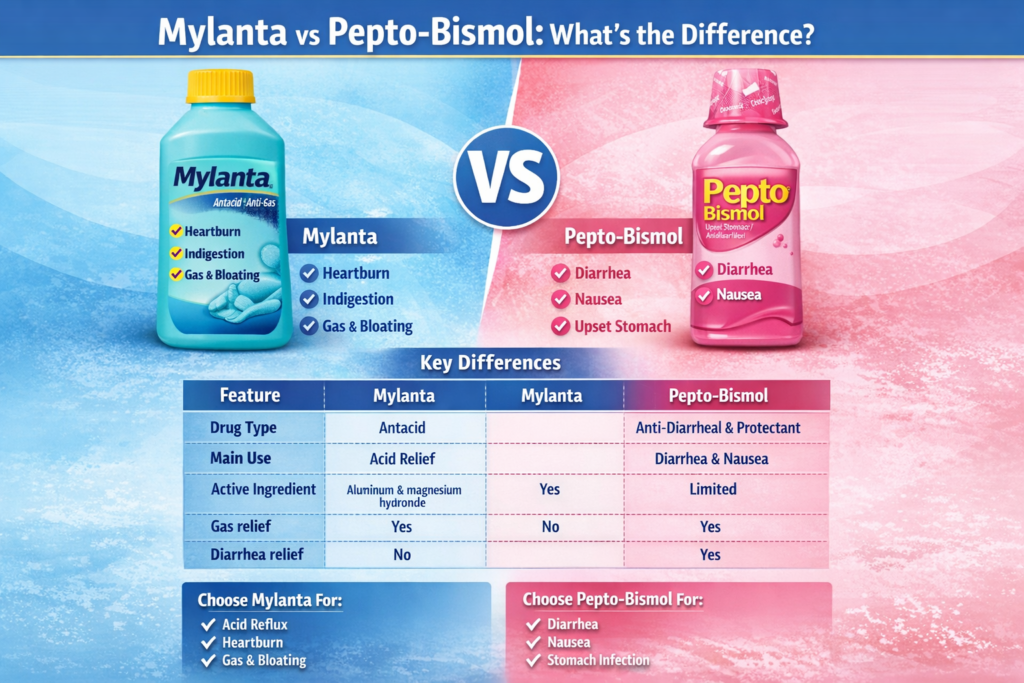
| Feature | Mylanta | Pepto-Bismol |
| Drug type | Antacid | Anti-diarrheal + protectant |
| Main use | Acid relief | Diarrhea & nausea |
| Active ingredient | Aluminum & magnesium hydroxide | Bismuth subsalicylate |
| Gas relief | Yes | Limited |
| Diarrhea relief | No | Yes |
This makes the mylanta and pepto bismol comparison simple: they target different symptoms.
Which Is Better: Mylanta or Pepto Bismol?
If you’re asking which is better pepto bismol or mylanta, the answer depends on your condition:
Choose Mylanta if you have:
- Acid reflux
- Heartburn
- Gas or bloating
Choose Pepto-Bismol if you have:
- Diarrhea
- Nausea
- Stomach infection
So when comparing pepto bismol or mylanta, think about your symptoms first.
Is Mylanta the Same as Pepto Bismol?
No—they are not the same.
- Mylanta = acid neutralizer
- Pepto-Bismol = stomach coating + anti-diarrheal
Is Mylanta or Pepto Bismol Better for Gastritis?
For people asking is mylanta or pepto bismol better for gastritis:
- Mylanta reduces acid irritation
- Pepto-Bismol protects the stomach lining
In many cases, Pepto-Bismol may be more effective, especially if inflammation is involved.
Can You Take Maalox and Pepto-Bismol Together?
Maalox is similar to Mylanta.
Taking it with Pepto-Bismol is not usually recommended without medical advice, as combining medications may increase side effects.
Related Comparisons
Kaopectate vs Mylanta
- Kaopectate treats diarrhea
- Mylanta treats acid
Alka-Seltzer vs Pepto-Bismol
- Alka-Seltzer helps with acid + pain
- Pepto is better for nausea and diarrhea
Is Pepto-Bismol an Antacid?
No. While it helps with indigestion, Pepto-Bismol is not a true antacid like Mylanta.
Substitutes and Alternatives
Homemade substitute for Pepto Bismol
- Ginger tea
- Banana and rice diet
- Yogurt for gut health
What is equivalent to Maalox?
- Mylanta (very similar formula)
Substitute for Maalox
- Mylanta
- Other antacids
- Calcium carbonate options
Another Name for Pepto-Bismol
The generic name is: Bismuth subsalicylate
Final Verdict: Mylanta vs Pepto Bismol
- Use Mylanta for acid-related issues
- Use Pepto-Bismol for diarrhea, nausea, and stomach irritation
When deciding between which is better mylanta or pepto bismol, the right choice depends entirely on your symptoms—not the brand.
Reference:
1. “Pepto-Bismol Oral: Uses, Side Effects, Interactions, Pictures, Warnings & Dosing.” WebMD.
2. “Mylanta Oral: Uses, Side Effects, Interactions, Pictures, Warnings & Dosing.” WebMD.
Read Next: