The difference between paresthesia and dysesthesia is that paresthesia is a painless abnormal sensation, while dysesthesia is a painful abnormal sensation felt in the same body areas such as the arms, hands, legs, or feet. In simple terms, paresthesia feels uncomfortable but not painful, whereas dysesthesia causes discomfort along with pain.
Both sensations arise due to nerve-related issues and can occur temporarily or as part of chronic neurological conditions. Understanding these differences helps in identifying the underlying cause and choosing the right treatment.
What Is Paresthesia?
Paresthesia refers to an abnormal tingling, prickling, or burning sensation that is usually non-painful. The feeling is commonly described as:
- Tingling
- Pins and needles
- Crawling sensation
- Numbness
- Mild itching
Causes of Paresthesia
Temporary paresthesia often occurs when pressure is placed on a nerve, such as:
- Sitting with crossed legs for too long
- Sleeping on an arm
- Leaning on elbows
Chronic paresthesia may be caused by:
- Stroke or mini-stroke (TIA)
- Multiple sclerosis
- Transverse myelitis
- Encephalitis
- Tumors pressing on nerves
- Carpal tunnel syndrome
- Central nervous system disorders
Diagnosis of Paresthesia
Doctors may use:
- Medical history and physical exam
- Neurological examination
- X-ray
- Blood tests
- MRI or spinal tap
Treatment for Paresthesia
Treatment depends on the cause and may include:
- Physiotherapy
- Lifestyle changes
- Treating underlying nerve or spinal problems
What Is Dysesthesia?
Dysesthesia is an abnormal painful sensation that can be burning, stabbing, ice-cold, electrical, or overly sensitive to touch. It is chronic and significantly affects daily activities, including sleep and mobility.
People with dysesthesia may describe the sensation as:
- Burning or stabbing pain
- Pain from light touch (allodynia)
- Electric shock–like feeling
- Hot feeling cold, or cold feeling hot
Causes of Dysesthesia
It commonly occurs due to nerve damage from conditions like:
- Multiple sclerosis
- Autoimmune disorders
- Lyme disease
- Acute inflammatory demyelinating polyneuropathy
- Peripheral neuropathy
- Drug or alcohol withdrawal
- Certain types of stroke
- Chemotherapy-induced nerve damage
Diagnosis of Dysesthesia
Tests may include:
- Physical exam
- Blood tests
- Cerebrospinal fluid analysis
- MRI
- Nerve conduction studies
- Skin biopsy
Treatment for Dysesthesia
Treatment options include:
- Antidepressants and anticonvulsants
- Lidocaine or capsaicin creams
- Hydrocortisone ointments
- Narcotic pain relievers (in severe cases)
- Acupuncture or acupressure
- Biofeedback therapy
- Stress management
- Meditation and hypnosis
- Physiotherapy
- Surgical intervention to cut severely damaged nerves (rare cases)
Similarities Between Paresthesia and Dysesthesia
Both conditions share the following features:
- They are abnormal nerve sensations.
- Nerve damage is often a root cause.
- They can be chronic.
- Diagnosis involves neurological and physical examinations.
- Physiotherapy helps manage symptoms.
Difference Between Paresthesia and Dysesthesia (Tabular Comparison)
| Feature | Paresthesia | Dysesthesia |
| Pain Level | Not painful | Painful |
| Sensation Type | Tingling, prickling, crawling, numbness | Burning, stabbing, electric shock, ice-cold, painful touch |
| Duration | Temporary or chronic | Mostly chronic |
| Main Cause | Pressure on nerves, CNS disorders | Nerve damage, autoimmune disorders, neuropathies |
| Daily Impact | Mild discomfort | Significant impact on sleep and quality of life |
| Treatment | Physical therapy, treat underlying cause | Medication, topical creams, physiotherapy, alternative therapies |
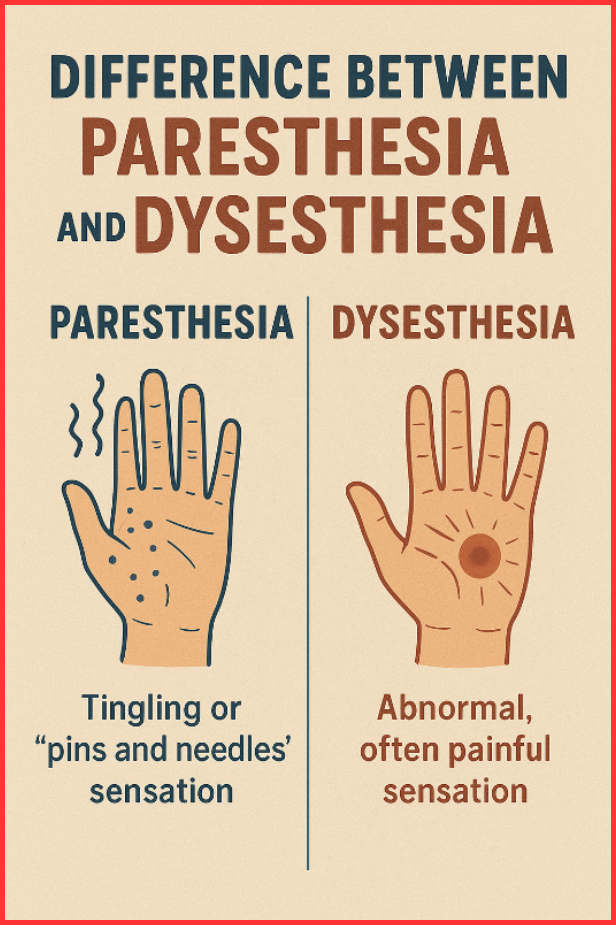
Summary – Difference Between Paresthesia and Dysesthesia
To summarize, the primary difference between paresthesia and dysesthesia is that paresthesia involves painless tingling or prickling sensations, while dysesthesia causes painful burning, stabbing, or electric sensations. Both conditions result from nerve dysfunction, but dysesthesia is more severe and often impacts daily life more significantly. Recognizing these differences helps guide proper diagnosis, treatment, and symptom management.
Reference:
1. Pietrangelo, Ann. “Parethesia: Causes, Treatment, and More.” Healthline, Healthline Media.
2. “Dysesthesia Pain from MS: Symptoms, Causes, and Treatment.” WebMD.
Read Next: