The primary difference between wormwood and sweet wormwood lies in their toxicity, chemical composition, and medicinal applications. Wormwood (Artemisia absinthium) is slightly toxic and commonly used for digestive support and as a general antiparasitic, while sweet wormwood (Artemisia annua) is non-toxic and valued for its potent compound artemisinin, which has strong antiparasitic and antimalarial properties.
Both plants belong to the Artemisia genus, which contains over 400 species in the daisy family (Asteraceae). Many species in this genus, including wormwood and sweet wormwood, are aromatic and contain active compounds that contribute to their medicinal uses.
What is Wormwood?
Wormwood (Artemisia absinthium) is a perennial plant native to Eurasia and Northern Africa. It is slightly toxic due to compounds like thujone but is widely used in traditional medicine to support digestion, stimulate appetite, and help remove intestinal parasites. Wormwood is also known as an ingredient in absinthe and other herbal spirits.
The plant usually grows in dry, uncultivated soils, rocky areas, or field edges. Its leaves and stems contain bitter substances called sesquiterpene lactones (absinthin) and essential oils such as thujone and chamazulene, which contribute to its medicinal and aromatic qualities. Wormwood is also noted for benefits to hair, skin, and female reproductive health.
Is Wormwood Good for Parasites?
Yes, wormwood has been traditionally used to help fight intestinal parasites. Although milder than sweet wormwood, it can still help reduce parasite loads when used correctly. It is best considered a supportive option for mild antiparasitic use.
Wormwood is often used as a supportive option for mild antiparasitic use and can be taken over a 7–14 day period. A common dosage is around 300–500 mg of the dried herb or 1–2 mL of tincture daily.
Wormwood Benefits
- Supports digestive health and appetite stimulation.
- Can help combat intestinal parasites.
- May improve hair, skin, and women’s health.
- Can be used in herbal teas, tinctures, or capsules.
How to Use Wormwood
- Wormwood tincture: A concentrated liquid form, usually taken in drops diluted in water.
- Wormwood tea: Steeping dried leaves in hot water for 5–10 minutes.
- Supplement form: Capsules or powdered extracts standardized for active compounds.
Wormwood Side Effects
- May cause mild digestive discomfort or nausea.
- Overuse can be toxic due to thujone content.
- Should be avoided during pregnancy or in individuals with liver conditions.
What is Sweet Wormwood?
Sweet wormwood (Artemisia annua) is a non-toxic annual plant native to temperate Asia. It is commonly referred to as sweet annie, sweet sagewort, or annual mugwort. It thrives in sunny locations with well-draining soil and mild temperatures.
This species is best known for artemisinin, a compound used to treat malaria and other parasitic infections. Artemisinin was discovered by Tu Youyou, who received the Nobel Prize in 2015 for this work. It can be consumed as tea, tinctures, or standardized supplements to target parasites and support overall digestive health.
Is Sweet Wormwood Good for Parasites?
Yes, sweet wormwood is effective against parasites due to its artemisinin content, which helps combat intestinal worms and other parasitic infections. It is generally preferred when stronger antiparasitic activity is needed.
Sweet Wormwood Benefits
- Effective antiparasitic and antimalarial.
- Supports digestive health.
- Can be used as tea or supplement for easy consumption.
How to Use Sweet Wormwood
- Tincture: A concentrated liquid form, usually taken in drops diluted in water.
- Tea: Steeping dried leaves in hot water for 5–10 minutes.
- Supplement form: Capsules or extracts standardized for artemisinin content.
Sweet Wormwood Side Effects
- Mild nausea or digestive discomfort.
- Rarely, dizziness or allergic reactions.
- Should be avoided during pregnancy or with liver issues.
How to Use Sweet Wormwood
- Tincture: A concentrated liquid form, usually taken in drops diluted in water.
- Tea: Made by steeping dried leaves in hot water for 5–10 minutes.
- Supplements: Capsules or extracts standardized for artemisinin content.
Wormwood vs Sweet Wormwood for Parasites (Summary Table)
| Aspect | Wormwood | Sweet Wormwood |
| Effectiveness | Mild, supportive antiparasitic | More potent due to artemisinin |
| Best For | Light parasite support | Stronger parasite infections |
| Key Compound | Thujone (primary active) | Artemisinin (highly effective) |
| Dosage | 300–500 mg dried herb or 1–2 mL tincture daily | Follow standardized supplement dosage |
| How to Take | Tea, tincture, or capsule (7–14 days) | Tea or standardized supplements |
| Side Effects | Possible mild digestive discomfort | May cause nausea; avoid during pregnancy |
Shared Traits of Wormwood and Sweet Wormwood
- Both belong to the Artemisia genus and the Asteraceae family.
- Both contain biologically active compounds that provide medicinal benefits.
- Both plants prefer temperate to warm climates.
- Both have a history of use against parasitic infections.
Wormwood vs Sweet Wormwood – Table Comparison
| Feature | Wormwood (Artemisia absinthium) | Sweet Wormwood (Artemisia annua) |
| Toxicity | Mildly toxic | Non-toxic |
| Origin | Eurasia & Northern Africa | Temperate Asia |
| Key Compounds | Thujone, absinthin | Artemisinin |
| Primary Uses | Digestive support, antiparasitic, skin & hair health | Antimalarial, antiparasitic, fever reduction |
| Forms Available | Tea, tincture, capsules | Tea, tincture, supplement |
| Taste | Bitter | Slightly sweet |
| Growth | Perennial herb | Annual herb |
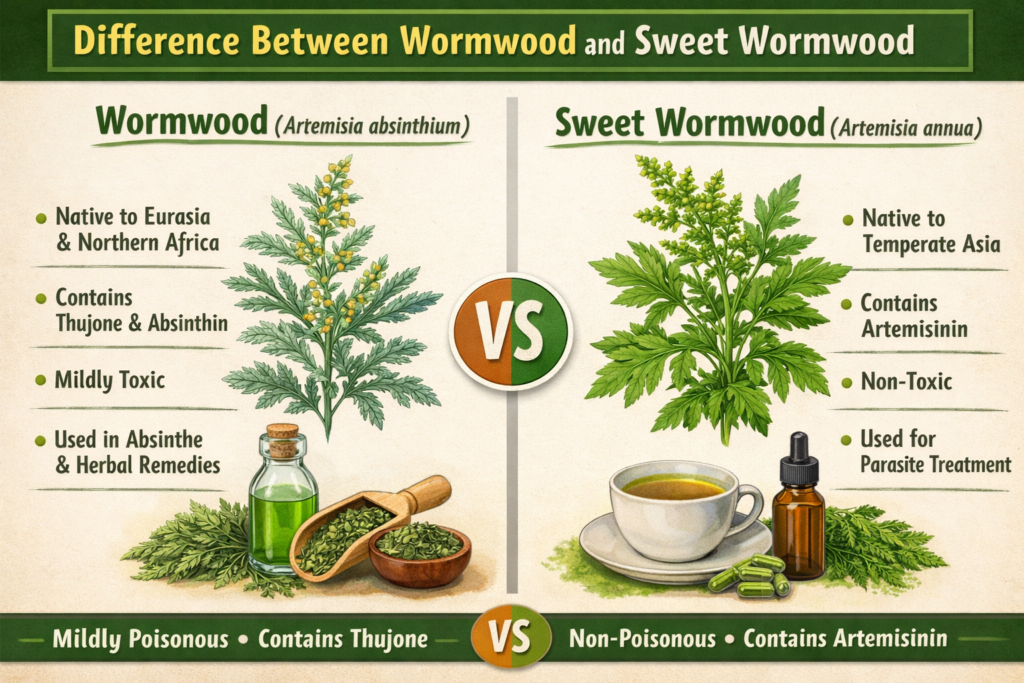
Summary
Wormwood (Artemisia absinthium) and sweet wormwood (Artemisia annua) are two distinct species in the Artemisia genus. Wormwood is slightly toxic, native to Eurasia and Northern Africa, and mainly used for digestion and mild antiparasitic purposes. Sweet wormwood is non-toxic, native to temperate Asia, and highly effective against parasites due to artemisinin. Their primary difference lies in chemical composition, toxicity, and specific medicinal applications.
FAQs
Yes. Wormwood is mildly toxic and mainly used for digestion and general antiparasitic support, while sweet wormwood is non-toxic and specifically effective against parasites due to artemisinin.
Tinctures or standardized supplements are preferred for parasite control. Tea is suitable for general wellness.
It is mainly used to treat parasitic infections, malaria, and support digestive health.
Long-term daily use may be harmful due to thujone content; short-term use is safer.
7–14 days is a common course, depending on the product and parasite type.
Sweet wormwood, black walnut, and cloves are commonly used for parasitic infections.
Sweet wormwood is more effective than regular wormwood.
Reference:
1. “Artemisia Absinthium.” An Overview | ScienceDirect Topics.
2. “Artemisia Annua.” An Overview | ScienceDirect Topics.
Read Next: