The key difference between hematoma and hemangioma is that a hematoma is a collection of blood trapped under the skin due to trauma, while a hemangioma is a benign tumor made of extra blood vessels, usually present at birth. This article explains both conditions in simple terms with examples, symptoms, causes, and a comparison table.
Both hematoma and hemangioma involve vascular tissues, but they are completely different in cause and nature.
- Hematoma = bleeding under the skin after injury
- Hemangioma = non-cancerous growth of blood vessels, often a birthmark
What is a Hematoma?
A hematoma is a localized collection of blood outside blood vessels, usually caused by trauma. It is commonly known as a bruise.
Common Types of Hematoma & Their Symptoms
1. Subdural Hematoma
- Headache
- Confusion
- Neurological deficits
- Seizures
2. Epidural Hematoma
- Severe back pain
- Weakness
- Loss of bladder or bowel control
3. Subungual Hematoma (Under the Nail)
- Nail pain
- Nail discoloration
- Nail lifting or loss
4. Abdominal or Splenic Hematoma
- Abdominal pain
- Flank pain
Causes of Hematoma
- Physical injury (falls, bumps, accidents)
- Strong coughing or straining
- Blood-thinning medications
- Example: Warfarin, Aspirin, Dipyridamole
How is a Hematoma Diagnosed?
- Physical examination
- RBC count
- Clotting studies (INR, PTT)
- CT scan or ultrasound
Treatment for Hematoma (RICE Method)
- Rest
- Ice
- Compression
- Elevation
- OTC pain relievers like acetaminophen or ibuprofen
What is a Hemangioma?
A hemangioma is a benign tumor formed by an abnormal buildup of extra blood vessels. It often appears as a bright red birthmark in newborns.
Characteristics of Hemangioma
- Raised, rubbery, red bump
- Appears at birth or within the first 2 weeks
- Usually on the face, scalp, chest, or back, but can appear anywhere
Symptoms of Hemangioma
- Red patch or bump increasing in size
- Soft, sponge-like texture
- Gradual fading over months to years
- Possible skin discoloration after fading
Causes of Hemangioma
The exact cause is unknown, but it results from abnormal formation of blood vessels, usually during infancy.
Diagnosis of Hemangioma
- Visual examination
- Ultrasound imaging
Treatment Options
- Beta-blockers (propranolol or topical timolol)
- Steroid injections or medications
- Surgery (only in resistant or complex cases)
Similarities Between Hematoma and Hemangioma
Both conditions share certain features:
- Involve vascular tissues
- Usually benign
- May not require treatment unless complications develop
- Diagnosed through physical examination
- Managed with medical supervision and non-invasive methods
Hematoma vs Hemangioma (Comparison Table)
| Feature | Hematoma | Hemangioma |
| Definition | Bleeding under the skin due to trauma | Benign blood vessel tumor present from birth |
| Cause | Injury, trauma, blood thinners | Congenital; exact cause unknown |
| Appearance | Blue, purple bruise | Red, raised, rubbery bump |
| Onset | After injury | Birth or early infancy |
| Common Locations | Skin, nails, brain, abdomen | Face, scalp, chest, back |
| Diagnosis | Physical test + imaging | Visual exam + ultrasound |
| Treatment | RICE, pain relievers | Beta-blockers, steroids, surgery |
| Nature | Blood leakage | Extra blood vessel growth |
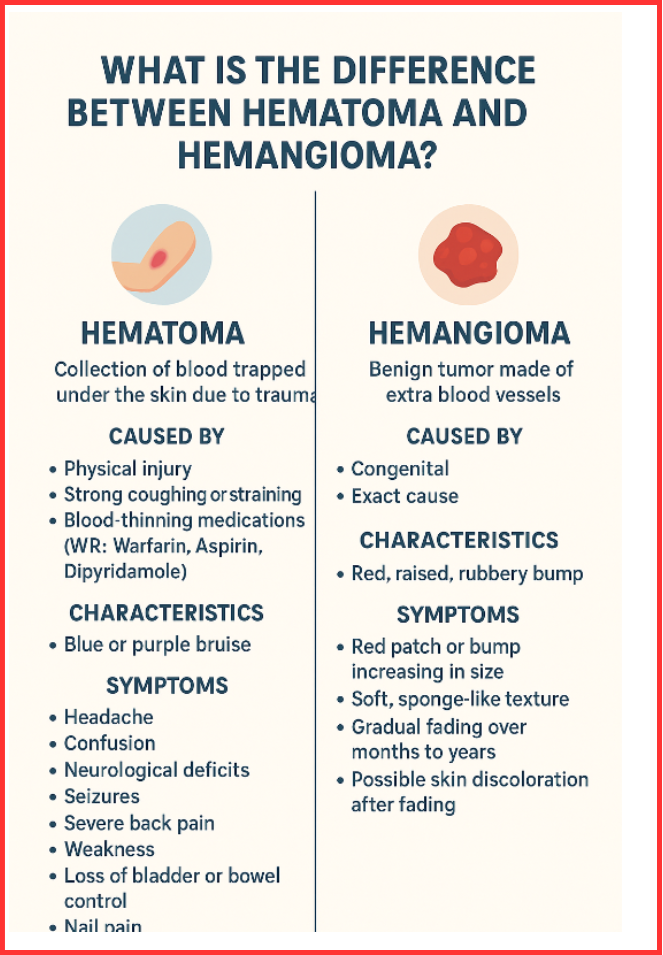
Summary – Hematoma vs Hemangioma
The main difference between hematoma and hemangioma is that hematoma results from bleeding under the skin caused by trauma, whereas hemangioma is a benign vascular tumor commonly found in infants. Both conditions are generally harmless but may require medical care when symptoms worsen.
Conclusion
The primary difference between hematoma and hemangioma lies in their cause and appearance—hematoma develops after injury due to trapped blood, while hemangioma appears at birth as a benign cluster of extra blood vessels. Understanding this difference helps in early identification and choosing the right treatment.
Reference:
1. Charles Patrick Davis. “What Is a Hematoma? Treatment, Symptoms & Pictures.” EMedicineHealth, EMedicineHealth.
2. “Hemangioma: Types, Causes & Treatments.” Cleveland Clinic.
Read Next: