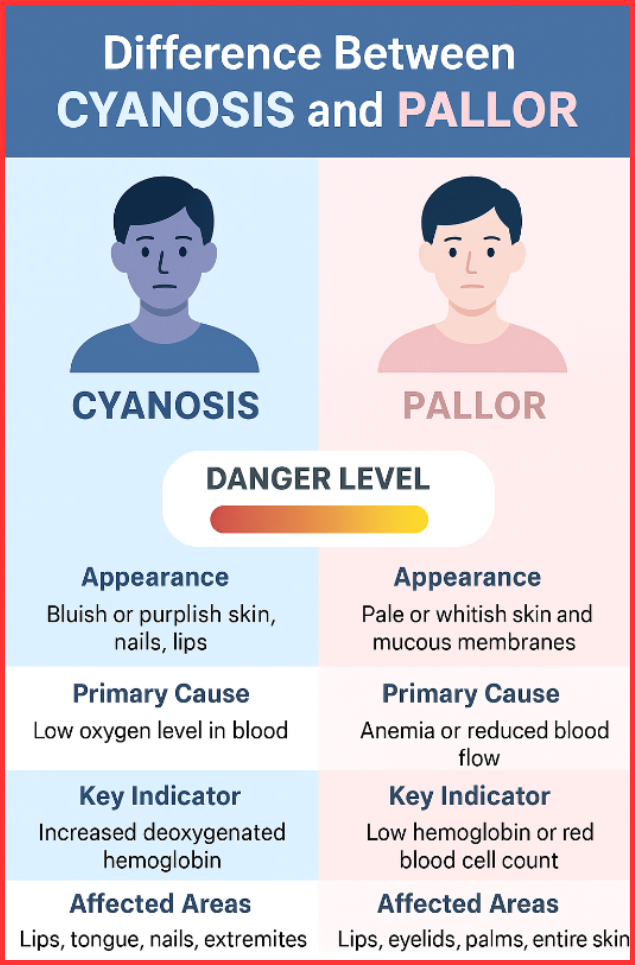
The difference between cyanosis and pallor is that cyanosis causes a bluish-purple discoloration of the skin, lips, or nails due to low oxygen levels in the blood, while pallor causes an unusually pale appearance of the skin and mucous membranes, mainly due to anemia or reduced blood flow. Both conditions signal underlying medical issues but differ in appearance, causes, and clinical significance.
Understanding the Difference Between Cyanosis and Pallor is crucial in identifying potential medical problems early. Cyanosis indicates inadequate oxygenation, while pallor often points to anemia, shock, or nutritional deficiencies. Because both conditions affect skin color, understanding their distinction helps in quicker diagnosis and management.
What is Cyanosis?
Cyanosis comes from the word “cyan,” meaning blue. It refers to the bluish or purplish discoloration of the skin, nails, and mucous membranes caused by low oxygen saturation in the blood. It occurs when deoxygenated hemoglobin rises above 5 g/dL.
Types of Cyanosis
- Peripheral Cyanosis
- Occurs due to reduced peripheral blood flow.
- Common Areas: Fingers, toes, palms, feet.
- Symptoms:
- Blue or greenish tint on extremities
- Cold sensation
- Color improves after warming
- Causes:
- Raynaud’s disease
- Low blood pressure
- Hypothermia
- Deep vein thrombosis
- Arterial problems
- Heart failure
- Hypovolemic shock
- Central Cyanosis
- Involves core body areas like lips and tongue.
- Symptoms do not improve with warming.
- Common in:
- Heart diseases
- Lung diseases
- Methemoglobinemia
- Sulfhemoglobinemia
- Other causes:
- Birth asphyxia
- Pneumothorax
- Lung edema
- Thromboembolism
- COPD
- Symptoms:
- Blue lips and tongue
- Difficulty breathing
- Rapid breathing
- Chest pain
- Fever, lethargy
- Poor feeding or sleeping in infants
- Differential Cyanosis
- Lower limbs appear blue while upper limbs remain pink.
- Seen in certain congenital heart diseases.
Is Cyanosis a Disease?
No. Cyanosis is a clinical sign, not a disease. It warns of an underlying medical issue that needs evaluation.
What is Pallor?
Pallor comes from the Latin word “palleo,” meaning pale. It refers to an abnormally pale appearance of the skin and mucous membranes.
Where Pallor Appears
- Lips
- Inner eyelids
- Tongue
- Palms
- Face
- Inside the mouth
- Overall skin
Causes of Pallor
While anemia is the most common cause, others include:
- Chemical poisoning
- Folic acid deficiency
- Arterial occlusion
- Kidney disease
- Excessive bleeding
- Lack of sunlight
- Infections
- Panic or fear
- Malnutrition
- Cancer
- Lack of sleep
Diagnosis of Pallor
Doctors may check:
- Skin and mucous membranes
- Inner eyelids for redness
- Nails and lips
Diagnostic tests include:
- Complete blood count (CBC)
- Reticulocyte count
- Fecal occult blood test
- Thyroid function tests
- Kidney function tests
- Nutrient deficiency tests
- Imaging tests for circulation
- Arteriography
- Pregnancy test (in women)
Similarities Between Cyanosis and Pallor
Both cyanosis and pallor:
- Affect skin and mucous membranes
- Can appear on lips, tongue, and palms
- Are caused by abnormal blood conditions
- Change normal skin color
- Are signs of underlying medical problems
Difference Between Cyanosis and Pallor (Tabular Comparison)
| Feature | Cyanosis | Pallor |
| Appearance | Bluish or purplish skin, nails, lips | Pale or whitish skin and mucous membranes |
| Primary Cause | Low oxygen level in blood | Anemia or reduced blood flow |
| Key Indicator | Increased deoxygenated hemoglobin | Low hemoglobin or red blood cell count |
| Affected Areas | Lips, tongue, nails, extremities | Lips, eyelids, palms, entire skin |
| Color Changes With Warming? | Peripheral cyanosis improves with warming | No significant change |
| Associated Conditions | Heart/lung diseases, shock, hypothermia | Anemia, malnutrition, blood loss |
| Urgency | Often needs immediate medical attention | Depends on severity and cause |
Conclusion: Difference Between Cyanosis and Pallor
Understanding the Difference Between Cyanosis and Pallor helps in early detection of serious problems. Cyanosis signals low oxygen levels, making the skin appear bluish, while pallor indicates anemia or poor blood flow, causing a pale appearance. Both conditions require medical evaluation to identify their root cause.
Reference:
1. “What Causes Pallor? the Conditions That Cause Pallor, Diagnosis, and Treatment.” WebMD.
2. “Central and Peripheral Cyanosis.” Statpearls – NCBI Bookshelf.
Read Next: