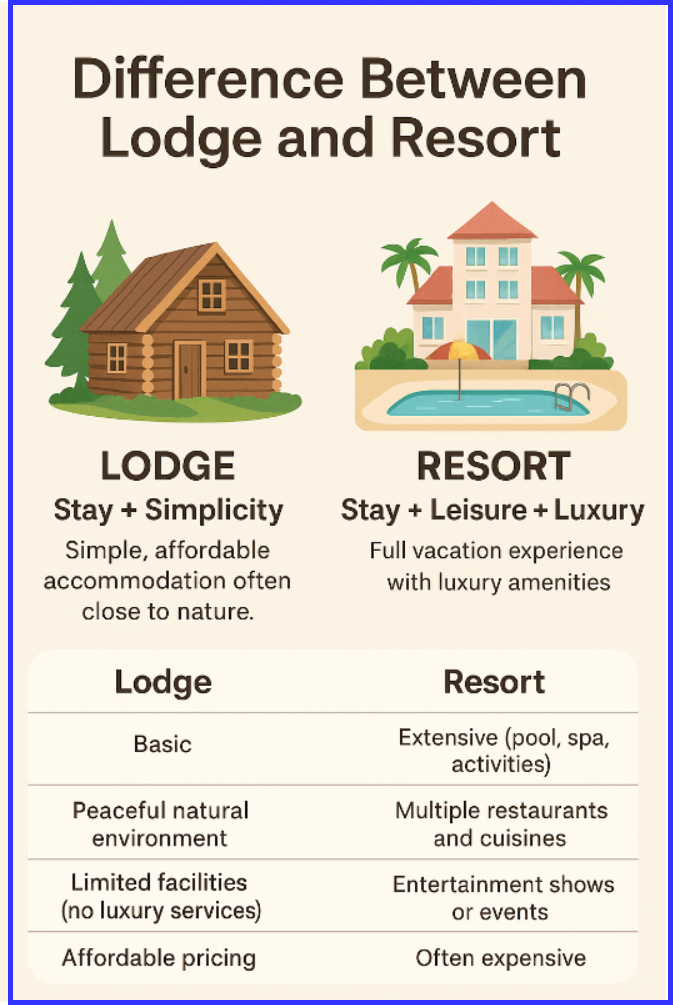
The Difference Between Lodge and Resort is that a lodge provides basic, affordable accommodation often close to nature, while a resort offers a full vacation experience with luxury amenities like pools, restaurants, spas, and activities.
In simple words, lodge = stay + simplicity, and resort = stay + leisure + luxury.
Meaning of Lodge
A lodge refers to a simple, cozy, and usually nature-focused accommodation that provides essential facilities for travelers. Lodges are commonly found near forests, mountains, wildlife reserves, or adventure spots. They emphasize comfort, affordability, and proximity to nature rather than luxury.
Lodge – Etymology
The word lodge comes from:
- Old French: loge meaning “hut,” “cabin,” or “shelter”
- Medieval Latin: laubia meaning “covered shelter”
- Evolution: Over time, the word evolved to mean a modest guest house or nature-centric shelter for short stays.
So, a lodge originally meant a simple place to stay or rest, especially in natural surroundings.
Sentence Examples of Lodge
- We stayed in a wooden lodge near the wildlife sanctuary.
- The mountain lodge offered a peaceful stay away from the city noise.
- Travelers prefer a lodge when they want budget-friendly accommodation.
- The lodge had basic rooms but beautiful nature views.
- They booked a forest lodge for their hiking trip.
Lodge Attributes
A lodge typically includes:
- Basic, comfortable rooms
- Peaceful natural environment
- Limited facilities (no luxury services)
- Affordable pricing
- Simple meals or community kitchen
- Ideal for hikers, wildlife enthusiasts, and nature lovers
The experience focuses on staying close to nature rather than enjoying multiple entertainment options.
Meaning of Resort
A resort is a large, self-contained vacation destination offering accommodation, dining, recreation, and leisure activities—all within the same property. Resorts provide a complete holiday experience with entertainment, relaxation, and comfort.
Resort – Etymology
The term resort comes from:
- Old French: resortir meaning “to go back” or “to return”
- Evolution: The word developed to mean places people “go to” for relaxation or recreation.
Thus, a resort implies a recreational destination people visit for pleasure and rest.
Sentence Examples of Resort
- The beach resort had a private pool, spa, and fine dining.
- They booked a resort for their family vacation.
- The mountain resort offered luxury rooms and adventure activities.
- A resort stay usually includes entertainment and relaxation options.
- The resort hosted a cultural event for its guests.
Resort Attributes
A resort generally offers:
- Luxurious rooms or suites
- Swimming pools, spa, gym, and indoor/outdoor activities
- Multiple restaurants and cafés
- Entertainment shows or events
- Recreation centers for families
- Professional hospitality services
- Private beaches, gardens, or adventure zones
A resort focuses on relaxation, luxury, and recreation, making it ideal for family vacations, honeymoons, and holiday getaways.
Key Differences Between Lodge and Resort
| Feature | Lodge | Resort |
| Meaning | Simple, nature-linked accommodation | Complete vacation destination with multiple facilities |
| Environment | Forests, mountains, wildlife areas | Beaches, cities, hill stations, luxury destinations |
| Amenities | Basic | Extensive (pool, spa, activities) |
| Purpose | Stay + nature experience | Stay + leisure + recreation |
| Cost | Budget-friendly | Often expensive |
| Target Guests | Nature lovers, trekkers, wildlife visitors | Families, couples, luxury travelers |
| Dining Options | Limited | Multiple restaurants and cuisines |
Similarities Between Lodge and Resort
Despite the differences, both share common features:
- Both provide accommodation for travelers
- Both may be located in nature-rich environments
- Both can offer guided tours or activities
- Both aim to provide comfort and relaxation
- Both can serve as holiday stays, depending on the guest’s preference
In simple terms, both are travel stays—but with different comfort levels and purposes.
Easy Illustration to Understand the Difference
Lodge:
A traveler staying in a wooden cabin near the forest, enjoying simple food and basic facilities.
Resort:
A family relaxing at a beachfront property with a swimming pool, private beach access, several restaurants, and entertainment activities.
Story: The Traveler’s Choice – Lodge vs Resort
Henry planned a weekend escape. He loved nature, so he first checked a lodge near a wildlife reserve. It offered wooden rooms, a peaceful view, and guided jungle walks. The price was low and perfect for adventure.
Then he explored a resort by the lakeside. It featured a pool, spa, private gardens, and gourmet dining. The cost was higher, but the experience promised luxury and comfort.
Henry realized the truth:
If he wanted simplicity and nature, the lodge was ideal.
If he wanted relaxation and luxury, the resort was perfect.
Depending on his mood, both stays offered wonderful experiences—just in different ways.
Conclusion
Understanding the Difference Between Lodge and Resort helps travelers choose the right stay based on comfort, budget, and purpose. Lodges offer simplicity and closeness to nature, while resorts provide a full luxury holiday experience. Whether you want peace or pampering, both can make your trip memorable—just in different styles.
Read Next: