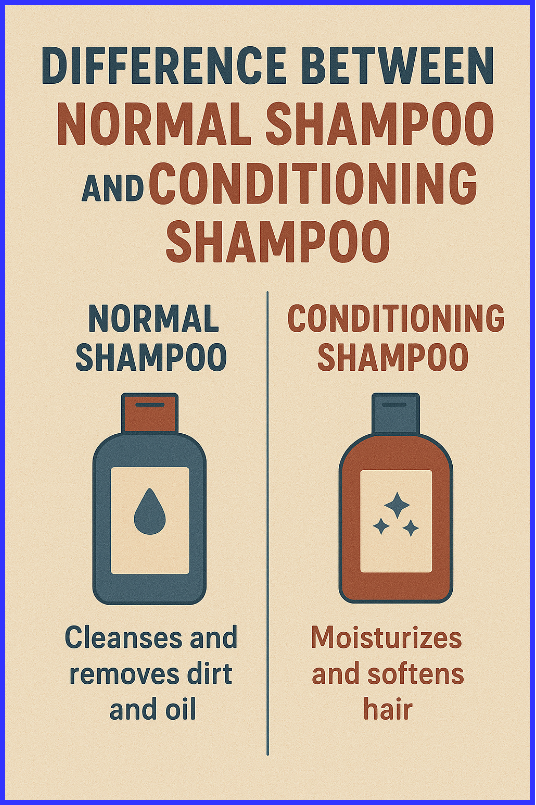
The difference between normal shampoo and conditioning shampoo lies in their purpose: a normal shampoo is designed only to clean the hair and scalp, while a conditioning shampoo performs both functions—cleansing the hair and conditioning it at the same time. In simple terms, if you want deep cleaning, choose normal shampoo; if you want cleaning plus softness in one step, choose conditioning shampoo.
Choosing the right hair cleanser starts with knowing the difference between normal shampoo and conditioning shampoo. Many people select a shampoo randomly without understanding what their hair actually needs. This guide explains both types, how they work, and which one is suitable for your hair type, with examples for better clarity.
What Is a Normal Shampoo?
A normal shampoo is a hair-cleansing product formulated to remove:
- Oil and sebum
- Dirt and pollutants
- Sweat
- Dandruff flakes
Unlike harsh soaps that were used earlier for washing hair, shampoos are gentler and help maintain scalp balance. However, normal shampoos often leave hair slightly dry, which is why people commonly use a separate conditioner afterward.
Examples of Normal Shampoo Types
Normal shampoos come in many specialized variants, such as:
- Anti-dandruff shampoo – Removes dandruff (e.g., Ketoconazole, Zinc-based shampoos)
- Color-protect shampoo – Gentle cleansers that prevent fading
- Baby shampoo – Extremely mild with no-tear formulas
- Sulfate-free shampoo – For sensitive scalp
- Gluten-free or wheat-free shampoo – For people with allergies
These shampoos serve one main purpose—cleaning.
What Is a Conditioning Shampoo?
A conditioning shampoo, often called a 2-in-1 shampoo, combines the action of a normal shampoo and a conditioner in a single product.
It cleans the hair by removing dirt, oil, and impurities and simultaneously coats the hair with conditioning ingredients such as:
- Silicones
- Natural oils (argan, coconut, olive)
- Moisturizing agents
This makes the hair softer, smoother, and easier to detangle—without needing a separate conditioner.
Why Was Conditioning Shampoo Introduced?
The concept was developed to save time. Earlier, washing the hair required two steps:
- Shampoo the hair
- Apply conditioner
A conditioning shampoo reduced these two steps into one. This made hair washing quicker, especially for people with busy schedules.
Key Differences Between Normal Shampoo and Conditioning Shampoo
Below is a clear comparison to make the selection easier:
1. Purpose
- Normal Shampoo: Cleans the hair and scalp only.
- Conditioning Shampoo: Cleans and conditions the hair simultaneously.
2. Time Required
- Normal Shampoo: Requires a second step—applying a conditioner afterward.
- Conditioning Shampoo: Saves time because it combines both steps.
3. Effect on Hair
- Normal Shampoo: Often leaves hair dry or frizzy.
- Conditioning Shampoo: Leaves hair moisturized, smooth, and manageable.
4. Variety Available
- Normal Shampoo: Comes in specialized versions—anti-dandruff, color-safe, baby shampoo, volumizing shampoo.
- Conditioning Shampoo: Mostly available as a general 2-in-1 hair cleanser.
5. Ingredients
Both may contain:
- Oils (coconut, argan, jojoba)
- Herbal extracts
- Mild detergents
However, conditioning shampoos contain extra conditioning agents, while normal shampoos do not.
Difference Between Normal Shampoo and Conditioning Shampoo (Table)
| Feature | Normal Shampoo | Conditioning Shampoo (2-in-1 Shampoo) |
| Primary Purpose | Cleanses hair and scalp | Cleanses + conditions in one step |
| Effect on Hair | May leave hair dry or rough | Leaves hair soft, smooth, and manageable |
| Need for Conditioner | Requires a separate conditioner after use | No need for a separate conditioner |
| Time Required | More time (two-step process) | Saves time (single-step process) |
| Moisturizing Ability | Low | High (contains conditioning agents) |
| Hair Type Suitability | Best for oily hair, scalp buildup, deep cleaning | Best for dry, frizzy, or normal hair |
| Variety & Specialization | Available in many types: anti-dandruff, color-safe, baby shampoo, volumizing | Limited variants; mainly general 2-in-1 formulas |
| Ingredients | Cleansing agents (surfactants) with few moisturizers | Cleansing agents + conditioners (silicones, oils) |
| Hair Feel After Wash | Clean but slightly dry | Clean, soft, detangled |
| Usage Preference | For people who prefer separate conditioning | For people who want quick hair care |
| Scalp Sensitivity | Excellent for deep scalp cleansing | Mild cleansing with added smoothness |
Which One Should You Use?
Choose Normal Shampoo If:
- You want deep cleaning
- You have oily hair
- You prefer using a separate conditioner
- You need specialized shampoo (anti-dandruff, color-safe, baby care)
Choose Conditioning Shampoo If:
- You want a quick wash
- Your hair is dry and needs moisture
- You want smooth, tangle-free hair without using a separate conditioner
- You have frizzy or wavy hair
Conclusion
The difference between normal shampoo and conditioning shampoo mainly depends on function: normal shampoo focuses on cleansing, while conditioning shampoo offers cleansing plus conditioning in one step. If you want a deep cleanse, choose normal shampoo; if you prefer moisture and manageability quickly, conditioning shampoo is the better option. Understanding this difference helps you choose the right product for your hair type.
Read Next: