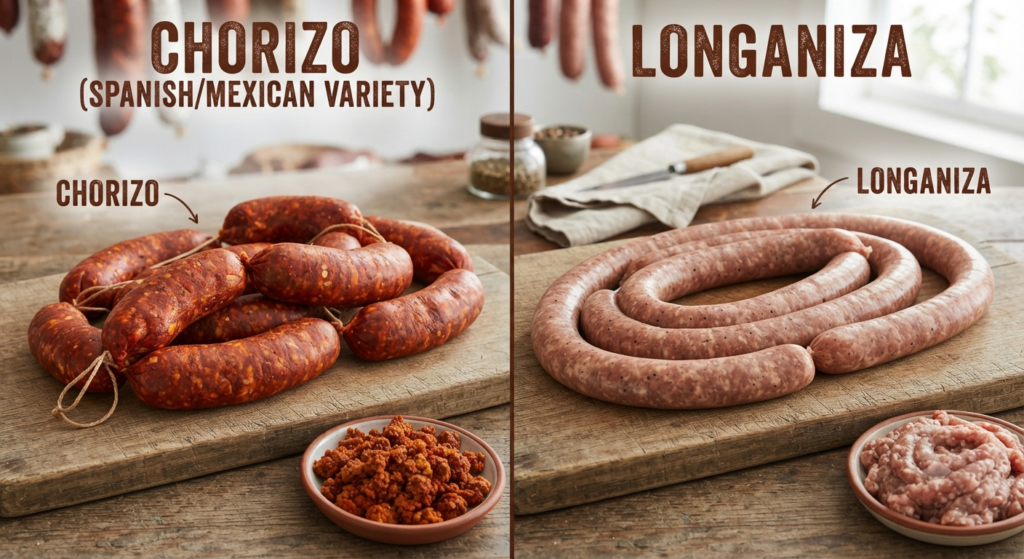
The main difference between Chorizo vs. Longaniza is that chorizo is typically seasoned with paprika, garlic, and smoky spices, giving it a rich, smoky, and slightly spicy flavor, whereas longaniza is seasoned with a wider variety of herbs and spices, resulting in a milder, sweeter, or tangier taste depending on the regional recipe. Chorizo is commonly associated with Spain and Mexico, while longaniza is popular in Spain, Latin America, and the Philippines.
Although both are flavorful sausages made primarily from pork, they differ in their ingredients, seasoning, preparation methods, texture, flavor profile, and culinary uses. Understanding Chorizo vs. Longaniza helps home cooks and food enthusiasts choose the right sausage for grilling, frying, stews, sandwiches, or traditional regional dishes.
Chorizo vs. Longaniza Comparison Table
The table below highlights the major differences between Chorizo vs. Longaniza.
| Feature | Chorizo | Longaniza |
|---|---|---|
| Origin | Spain and Mexico | Spain, Latin America, Philippines |
| Main Meat | Usually pork | Pork, beef, chicken, or mixed meats |
| Flavor | Smoky, spicy, rich | Mild, sweet, tangy, or savory |
| Primary Seasoning | Paprika, garlic, chili | Garlic, vinegar, oregano, black pepper, regional spices |
| Color | Deep red | Light red to brown |
| Texture | Firm (cured) or soft (fresh) | Usually coarse and juicy |
| Preparation | Fresh, cured, or smoked | Mostly fresh, sometimes cured or smoked |
| Spiciness | Mild to very spicy | Usually mild, varies by region |
| Cooking Methods | Grill, fry, bake, stews | Grill, fry, roast, breakfast dishes |
| Popular Regions | Spain, Mexico, Portugal | Spain, Mexico, Philippines, Caribbean |
| Best Uses | Tapas, paella, tacos, soups | Breakfast, sandwiches, rice dishes, empanadas |
| Shelf Life | Longer for cured varieties | Shorter unless cured or smoked |
What Is Chorizo?
Chorizo is a highly seasoned sausage traditionally made from pork, although beef and other meats may also be used in some regions. It is famous for its bold smoky flavor, which primarily comes from paprika, garlic, and various spices. Depending on the country of origin, chorizo may be sold fresh, cured, or smoked.
Spanish chorizo is usually cured and ready to eat, whereas Mexican chorizo is typically sold fresh and must be cooked before consumption. Today, chorizo is widely used in European, Latin American, and international cuisines.
Characteristics of Chorizo
- Made primarily from pork
- Rich smoky flavor
- Paprika is the signature seasoning
- Bright red appearance
- Available as fresh or cured sausage
- Moderate to high fat content
- Mild to spicy varieties
- Firm texture when cured
- Popular in Spanish and Mexican cuisine
- Versatile cooking ingredient
Popular Types of Chorizo
- Spanish Chorizo
- Mexican Chorizo
- Portuguese Chouriço
- Argentine Chorizo
- Colombian Chorizo
What Is Longaniza?
Longaniza is a traditional sausage that originated in Spain but has evolved into numerous regional varieties throughout Latin America and the Philippines. Unlike chorizo, longaniza does not have a single standardized seasoning blend. Each country—and often each region—uses its own combination of herbs, spices, vinegar, citrus juice, or sugar to create unique flavors.
Longaniza is generally sold fresh, although smoked and cured versions are also available. Its taste ranges from savory and garlicky to sweet, tangy, or mildly spicy, depending on the local recipe.
Characteristics of Longaniza
- Usually made from pork
- Can also contain beef or chicken
- Mild, sweet, tangy, or spicy flavor
- Uses regional spice blends
- Often contains vinegar or citrus
- Fresh sausage in most regions
- Coarse texture
- Highly versatile
- Popular breakfast sausage
- Widely consumed across Latin America and the Philippines
Popular Types of Longaniza
- Spanish Longaniza
- Filipino Longganisa
- Mexican Longaniza
- Dominican Longaniza
- Puerto Rican Longaniza
Chorizo vs. Longaniza: Key Differences
1. Origin
Chorizo originated in Spain and later spread to countries such as Mexico, Portugal, and Argentina, where each region developed its own distinctive variation. Spanish chorizo is especially well known for its cured preparation and smoky flavor.
Longaniza also has Spanish roots but became deeply integrated into the cuisines of Latin America, the Caribbean, and the Philippines. Over time, each country adapted the recipe using locally available spices and cooking traditions, resulting in numerous regional varieties.
2. Main Ingredients
Chorizo is traditionally prepared using ground pork, although beef or mixed meats may be used in some regional recipes. The meat is combined with fat and a carefully selected blend of spices to produce its characteristic rich flavor.
Longaniza is more flexible in terms of ingredients. It is commonly made from pork, but many recipes also use beef, chicken, or a combination of meats. Some regional versions include additional ingredients such as citrus juice, vinegar, or sugar to create unique flavor profiles.
3. Seasoning
One of the biggest differences between Chorizo vs. Longaniza is the seasoning.
Chorizo relies heavily on paprika, which gives it its signature red color and smoky taste. Garlic, chili powder, oregano, cumin, and black pepper are also commonly added, depending on the regional recipe.
Longaniza, however, uses a much broader range of seasonings. Recipes may include garlic, black pepper, oregano, vinegar, annatto, cinnamon, cloves, citrus juice, or sugar. As a result, its flavor varies considerably from one country to another.
4. Flavor Profile
Chorizo is known for its bold, smoky, savory, and slightly spicy flavor. The generous use of paprika and chili creates a rich taste that stands out in a variety of dishes.
Longaniza generally has a milder flavor, although some regional varieties can be spicy. Many versions are slightly sweet or tangy because of ingredients such as vinegar, citrus, or sugar, giving them a more balanced and aromatic taste.
5. Color
The appearance of these sausages differs mainly because of the spices used.
Chorizo typically has a deep red color, largely due to paprika or chili powder.
Longaniza usually ranges from light red to brown depending on the ingredients. Some varieties are paler because they contain little or no paprika, while others develop a darker color after smoking.
6. Texture
Chorizo may have a firm texture when cured or a softer consistency when sold fresh. The texture also varies depending on whether the meat is finely or coarsely ground.
Longaniza generally has a coarser and juicier texture because it is commonly prepared as a fresh sausage. The larger meat particles provide a more rustic mouthfeel after cooking.
7. Preparation Method
Chorizo is available in several forms, including fresh, cured, smoked, and semi-cured. Fresh chorizo requires cooking before consumption, while cured Spanish chorizo can often be eaten without further preparation.
Longaniza is most commonly sold fresh and is typically grilled, pan-fried, or roasted before serving. Some regional varieties are also cured or smoked to extend shelf life and enhance flavor.
8. Culinary Uses
Chorizo is widely used in dishes such as paella, tacos, soups, stews, pasta, pizzas, sandwiches, and tapas. Its smoky flavor enhances both traditional and modern recipes.
Longaniza is commonly served as a breakfast sausage with eggs and rice, or used in sandwiches, empanadas, rice dishes, tortillas, beans, and grilled platters. Its milder flavor allows it to complement a wide variety of ingredients.
9. Regional Varieties
Chorizo has several famous regional styles, including Spanish, Mexican, Portuguese, Argentine, and Colombian chorizo, each with distinct seasoning and preparation methods.
Longaniza is even more diverse, with well-known varieties from Spain, Mexico, the Dominican Republic, Puerto Rico, Chile, and the Philippines, where recipes differ significantly in sweetness, acidity, and spice levels.
10. Shelf Life
Cured chorizo generally has a longer shelf life because the curing and smoking processes reduce moisture and inhibit microbial growth. Fresh chorizo, however, should be refrigerated and cooked promptly.
Fresh longaniza has a shorter shelf life and should also be stored under refrigeration. Smoked or cured versions last longer but still require proper storage to maintain quality and safety.
Similarities Between Chorizo and Longaniza
Although Chorizo and Longaniza differ in their seasoning, flavor, and regional styles, they also share many common characteristics. Both are traditional sausages with Spanish origins and are widely enjoyed in cuisines around the world. They are versatile ingredients that can be grilled, fried, baked, or incorporated into a variety of savory dishes.
Some important similarities between chorizo and longaniza include:
- Both are traditional sausages with roots in Spanish cuisine.
- Both are primarily made from pork, although other meats may also be used.
- Both are seasoned with garlic and a blend of spices.
- Both are available in fresh and, in some regions, cured or smoked forms.
- Both can be grilled, pan-fried, roasted, or baked.
- Both are rich in protein and dietary fat.
- Both are widely used in breakfast, lunch, and dinner recipes.
- Both pair well with rice, bread, beans, eggs, vegetables, and tortillas.
- Both have numerous regional varieties with unique flavors.
- Both are popular in Spain, Latin America, and many other countries.
Advantages of Chorizo
Chorizo is valued for its bold flavor, versatility, and ability to enhance a wide range of dishes. Its smoky seasoning and rich texture make it a favorite ingredient in both traditional and modern cuisines.
Some major advantages of chorizo include:
- Rich, smoky, and robust flavor.
- Distinctive taste from paprika and garlic.
- Available in both fresh and cured varieties.
- Long shelf life for cured versions.
- Adds depth and color to recipes.
- Suitable for grilling, frying, baking, and stewing.
- Widely available in international markets.
- Pairs well with vegetables, rice, pasta, and beans.
- Ideal for tapas, tacos, pizzas, and soups.
- High in protein, making it a satisfying ingredient.
Advantages of Longaniza
Longaniza is appreciated for its diverse regional flavors and culinary versatility. Depending on the recipe, it can be savory, sweet, tangy, or mildly spicy, making it suitable for a variety of traditional dishes.
Some major advantages of longaniza include:
- Wide variety of regional recipes.
- Mild, sweet, tangy, or spicy flavor options.
- Often contains aromatic herbs and spices.
- Excellent for breakfast dishes.
- Pairs well with rice, eggs, bread, and vegetables.
- Juicy texture enhances grilled and fried dishes.
- Can be made from pork, beef, chicken, or mixed meats.
- Easy to customize with local seasonings.
- Popular in Latin American and Filipino cuisine.
- Suitable for everyday meals and festive occasions.
Which Is Better—Chorizo or Longaniza?
Neither chorizo nor longaniza is universally better because each offers a unique taste and culinary experience. The best choice depends on your personal preference, the recipe you’re preparing, and the flavor profile you want to achieve.
Chorizo is the better option if you prefer a smoky, spicy, and intensely flavored sausage. Its paprika-rich seasoning makes it ideal for dishes such as paella, tacos, soups, stews, pasta, and grilled platters. Cured chorizo is also convenient because it can often be sliced and eaten without additional cooking.
Longaniza, on the other hand, is a great choice if you enjoy a milder, sweeter, or tangier sausage. Its regional variations provide a wide range of flavors, making it suitable for breakfast dishes, sandwiches, rice meals, empanadas, and family-style recipes.
In summary:
- Choose chorizo if you want:
- A smoky and spicy flavor.
- Rich paprika seasoning.
- A sausage for tapas, paella, tacos, or stews.
- Longer storage with cured varieties.
- Choose longaniza if you want:
- A milder or sweeter taste.
- Greater variety of regional flavors.
- A versatile breakfast or grilled sausage.
- Traditional Latin American or Filipino recipes.
Both sausages are delicious and versatile, making either an excellent addition to your kitchen depending on your cooking style.
Conclusion
The comparison of Chorizo vs. Longaniza highlights two popular sausages that share a common heritage but differ in flavor, seasoning, preparation, and culinary traditions. Chorizo is known for its bold smoky taste, vibrant red color, and generous use of paprika, making it a staple in Spanish and Mexican cuisine. Longaniza, in contrast, offers a broader range of regional flavors, from savory and garlicky to sweet and tangy, and is widely enjoyed across Latin America and the Philippines.
Understanding Chorizo vs. Longaniza helps you choose the right sausage for your favorite recipes. If you prefer bold and smoky flavors, chorizo is an excellent choice. If you enjoy a milder, more customizable sausage with diverse regional styles, longaniza is the better option. Both remain flavorful ingredients that can elevate everyday meals as well as festive dishes.
Frequently Asked Questions (FAQs)
The main difference between Chorizo vs. Longaniza is their seasoning. Chorizo is typically flavored with paprika, garlic, and chili, giving it a smoky and spicy taste, while longaniza uses a wider variety of regional spices, herbs, vinegar, or citrus, resulting in flavors that can range from savory to sweet or tangy.
In most cases, yes. Chorizo is generally spicier because it contains paprika, chili powder, or other hot spices. Longaniza is usually milder, although some regional varieties can also be moderately spicy.
They can be substituted in some recipes, but the flavor will be different. Chorizo adds a smoky and spicy taste, while longaniza provides a milder, sweeter, or tangier flavor depending on the regional variety.
Both sausages are good sources of protein, but they are also relatively high in fat and sodium. The nutritional value depends on the ingredients, cooking method, and recipe. Lean or homemade versions of either sausage can be a healthier option.
Chorizo is most closely associated with Spain and Mexico, while longaniza is popular in Spain, the Philippines, Mexico, the Dominican Republic, Puerto Rico, Chile, and other Latin American countries.
Read Next: