Terramycin vs. Tobramycin is a common comparison because both medications are antibiotics used to treat bacterial infections. However, they belong to different antibiotic classes, work against different types of bacteria, and are prescribed for different medical conditions. Although their names sound similar, they are not interchangeable.
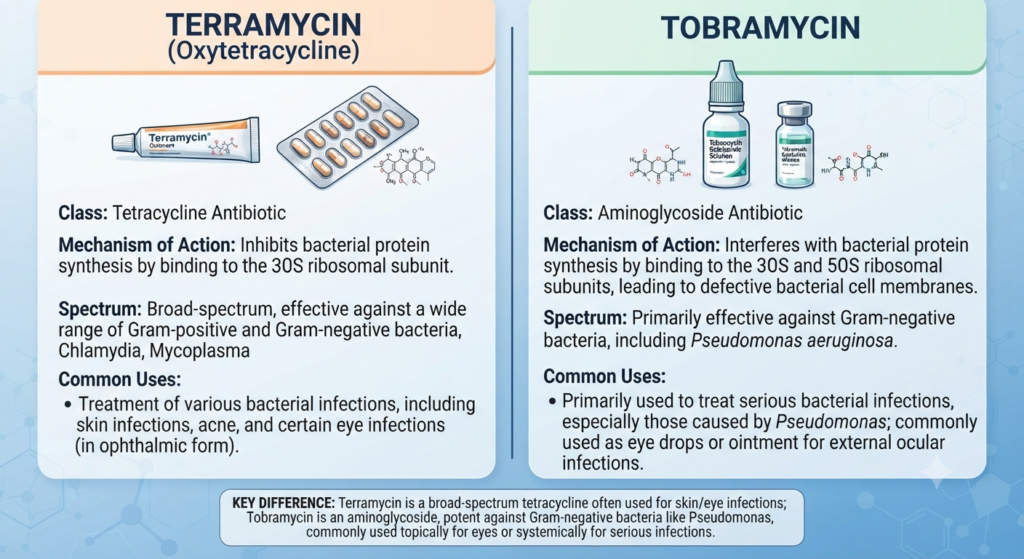
Terramycin contains oxytetracycline, a tetracycline antibiotic that stops bacteria from producing proteins required for growth. It is effective against a broad range of Gram-positive and Gram-negative bacteria and is available in oral, topical, and ophthalmic formulations in many countries.
Tobramycin, on the other hand, is an aminoglycoside antibiotic that kills susceptible bacteria by disrupting protein synthesis. It is especially effective against Gram-negative organisms such as Pseudomonas aeruginosa and is commonly available as eye drops, eye ointment, inhalation solution, and injectable medication.
Understanding the difference between Terramycin and Tobramycin helps healthcare professionals and patients choose the most appropriate antibiotic based on the infection, bacterial susceptibility, and patient-specific factors.
Terramycin vs. Tobramycin Comparison Table
The table below highlights the major differences between Terramycin and Tobramycin.
| Feature | Terramycin | Tobramycin |
|---|---|---|
| Generic Name | Oxytetracycline | Tobramycin |
| Drug Class | Tetracycline antibiotic | Aminoglycoside antibiotic |
| Main Action | Inhibits bacterial protein synthesis | Disrupts bacterial protein synthesis leading to bacterial death |
| Spectrum | Broad-spectrum | Mainly Gram-negative bacteria |
| Effective Against | Gram-positive and Gram-negative bacteria | Especially Pseudomonas and other Gram-negative bacteria |
| Common Uses | Skin, eye, respiratory, and certain bacterial infections | Eye infections, severe systemic infections, respiratory infections |
| Dosage Forms | Oral tablets, capsules, ointment, eye ointment | Eye drops, eye ointment, inhalation solution, injection |
| Prescription Required | Yes | Yes |
| Common Side Effects | Nausea, diarrhea, photosensitivity | Eye irritation, kidney toxicity, hearing damage (systemic use) |
| Pregnancy | Use only when prescribed | Use with caution under medical supervision |
| Main Advantage | Broad antibacterial coverage | Highly effective against resistant Gram-negative bacteria |
What Is Terramycin?
Terramycin is the brand name for oxytetracycline, a member of the tetracycline family of antibiotics. It works by preventing bacteria from producing proteins necessary for their growth and reproduction. Because it stops bacterial multiplication rather than killing bacteria immediately, it is considered a bacteriostatic antibiotic.
Terramycin has been used for decades to treat various bacterial infections affecting the eyes, skin, respiratory tract, and other body systems. In veterinary medicine, it is also widely used for treating infections in livestock and companion animals.
Its broad-spectrum activity makes it useful against many susceptible bacteria, but increasing antibiotic resistance has reduced its effectiveness against some organisms.
Characteristics of Terramycin
- Contains oxytetracycline as the active ingredient.
- Belongs to the tetracycline antibiotic class.
- Acts as a bacteriostatic antibiotic.
- Effective against numerous Gram-positive and Gram-negative bacteria.
- Inhibits bacterial protein synthesis by binding to the 30S ribosomal subunit.
- Available in oral and topical formulations.
- Requires a prescription in most countries.
Features of Terramycin
Terramycin offers several advantages that make it useful in clinical practice.
- Broad antibacterial coverage.
- Suitable for multiple types of bacterial infections.
- Available as ophthalmic ointment for bacterial eye infections.
- Can be used as oral therapy for selected infections.
- Long history of clinical use.
- Generally well tolerated when used correctly.
Common Uses of Terramycin
Doctors may prescribe Terramycin for:
- Bacterial eye infections
- Skin infections
- Respiratory tract infections
- Acne caused by susceptible bacteria
- Certain sexually transmitted bacterial infections
- Rickettsial infections
- Veterinary bacterial infections
Because antibiotic resistance varies among bacteria, Terramycin should only be used when prescribed by a healthcare professional.
What Is Tobramycin?
Tobramycin is an aminoglycoside antibiotic that directly kills susceptible bacteria by interfering with protein production. Unlike tetracyclines, Tobramycin is considered bactericidal, meaning it destroys bacteria instead of merely preventing their growth.
It is especially valuable for treating infections caused by difficult Gram-negative bacteria, including Pseudomonas aeruginosa, which is responsible for many hospital-acquired infections.
Tobramycin is commonly prescribed as eye drops for bacterial conjunctivitis, injections for severe infections, and inhalation therapy for people with cystic fibrosis suffering from chronic lung infections.
Characteristics of Tobramycin
- Contains tobramycin as the active ingredient.
- Belongs to the aminoglycoside class.
- Acts as a bactericidal antibiotic.
- Primarily targets Gram-negative bacteria.
- Highly effective against Pseudomonas aeruginosa.
- Available as eye drops, ointment, inhalation solution, and injection.
- Prescription medication only.
Features of Tobramycin
Some important features of Tobramycin include:
- Rapid bacterial killing.
- Excellent activity against resistant Gram-negative organisms.
- Frequently used in hospitals.
- Effective ophthalmic antibiotic.
- Available for inhalation therapy in cystic fibrosis.
- Often combined with other antibiotics for severe infections.
Common Uses of Tobramycin
Healthcare providers commonly prescribe Tobramycin for:
- Bacterial conjunctivitis
- Corneal infections
- Severe bloodstream infections
- Hospital-acquired pneumonia
- Urinary tract infections caused by susceptible bacteria
- Respiratory infections due to Pseudomonas
- Lung infections in cystic fibrosis patients
Terramycin vs. Tobramycin: Detailed Comparison
Although both medications are antibiotics used to treat bacterial infections, Terramycin vs. Tobramycin differs significantly in their antibiotic class, spectrum of activity, mechanism of action, clinical uses, dosage forms, and side effects. Understanding these differences helps ensure the right antibiotic is selected for the right infection.
1. Generic Name
The most basic difference between Terramycin vs. Tobramycin is their active ingredient.
Terramycin contains oxytetracycline, which belongs to the tetracycline family of antibiotics.
Tobramycin contains tobramycin, an aminoglycoside antibiotic commonly used for serious Gram-negative bacterial infections.
Although both drugs fight bacteria, they are chemically unrelated and should not be considered substitutes for one another.
2. Antibiotic Class
Each medication belongs to a different antibiotic group, which determines how it works against bacteria.
Terramycin is classified as a tetracycline antibiotic.
Tobramycin belongs to the aminoglycoside antibiotic class.
These classes have different antibacterial properties, resistance patterns, and clinical applications.
3. Mechanism of Action
One of the most important differences in Terramycin vs. Tobramycin is how they inhibit bacterial growth.
Terramycin blocks bacterial protein synthesis by reversibly binding to the 30S ribosomal subunit. This prevents bacteria from producing proteins needed for growth and reproduction, making it a bacteriostatic antibiotic.
Tobramycin also targets the 30S ribosomal subunit, but it binds more strongly and causes errors in protein synthesis, resulting in bacterial cell death. Therefore, it is considered a bactericidal antibiotic.
4. Spectrum of Activity
The range of bacteria each antibiotic can treat is another major distinction.
Terramycin provides broad-spectrum coverage, making it effective against many Gram-positive and Gram-negative bacteria, as well as certain atypical organisms.
Tobramycin has a narrower spectrum but is highly effective against aerobic Gram-negative bacteria, particularly Pseudomonas aeruginosa, which often causes difficult hospital-acquired infections.
5. Common Medical Uses
The infections treated by these antibiotics differ considerably.
Terramycin is commonly prescribed for:
- Bacterial eye infections
- Skin infections
- Respiratory tract infections
- Acne
- Certain sexually transmitted bacterial infections
- Rickettsial infections
Tobramycin is primarily used for:
- Bacterial conjunctivitis
- Corneal ulcers
- Hospital-acquired pneumonia
- Bloodstream infections
- Urinary tract infections caused by susceptible bacteria
- Lung infections in patients with cystic fibrosis
6. Dosage Forms
Another difference in Terramycin vs. Tobramycin is their available formulations.
Terramycin is available as:
- Oral tablets
- Capsules
- Topical ointment
- Ophthalmic ointment
Tobramycin is available as:
- Eye drops
- Eye ointment
- Injectable solution
- Inhalation solution for respiratory infections
The appropriate dosage form depends on the location and severity of the infection.
7. Effectiveness Against Pseudomonas
This is one of the biggest clinical differences.
Terramycin generally has limited effectiveness against Pseudomonas aeruginosa because many strains are naturally resistant.
Tobramycin is considered one of the preferred antibiotics for susceptible Pseudomonas infections and is widely used in hospitals for this purpose.
8. Side Effects
Like all antibiotics, both medications can cause adverse effects, but the type of side effects differs.
Possible side effects of Terramycin include:
- Nausea
- Vomiting
- Diarrhea
- Photosensitivity (increased sensitivity to sunlight)
- Stomach discomfort
- Allergic reactions
Possible side effects of Tobramycin include:
- Eye irritation (with eye drops)
- Kidney toxicity (nephrotoxicity)
- Hearing damage (ototoxicity)
- Balance problems
- Injection-site reactions
The serious kidney and hearing effects are mainly associated with injectable Tobramycin, especially when used at high doses or for prolonged periods.
9. Resistance Patterns
Antibiotic resistance affects the usefulness of both medications.
Terramycin has been used for many decades, and resistance has developed in numerous bacterial species. As a result, susceptibility testing may be necessary before treatment.
Tobramycin also faces bacterial resistance, but it remains highly effective against many Gram-negative pathogens when used appropriately.
Proper antibiotic stewardship helps reduce the development of resistance.
10. Pregnancy and Breastfeeding
Pregnancy safety is another important difference.
Terramycin is generally not recommended during pregnancy, particularly during the second and third trimesters, because tetracyclines may affect fetal bone and tooth development.
Tobramycin should also be used during pregnancy only when the expected benefits outweigh the potential risks, particularly with systemic administration.
Patients who are pregnant or breastfeeding should always consult their healthcare provider before using either medication.
11. Prescription Requirements
Both antibiotics require professional medical supervision.
Neither Terramycin nor Tobramycin should be used without a prescription because inappropriate antibiotic use can lead to treatment failure and antibiotic resistance.
Healthcare providers determine the correct antibiotic based on:
- Type of infection
- Bacterial culture results
- Severity of illness
- Patient age
- Kidney function
- Drug allergies
12. Which Antibiotic Is Stronger?
Many people assume one antibiotic is “stronger” than another, but this is misleading.
Terramycin is not weaker than Tobramycin—it simply works better against different bacteria.
Similarly, Tobramycin is not universally stronger. It is particularly powerful against susceptible Gram-negative bacteria but is ineffective against many organisms that Terramycin can treat.
The best antibiotic is always the one that effectively targets the bacteria causing the infection.
Similarities Between Terramycin and Tobramycin
Despite their differences, Terramycin and Tobramycin share several important similarities.
- Both are prescription antibiotics.
- Both inhibit bacterial protein synthesis.
- Both are used to treat bacterial infections.
- Both are available as ophthalmic preparations for eye infections.
- Both should be taken exactly as prescribed.
- Both may cause allergic reactions in sensitive individuals.
- Both contribute to antibiotic resistance if misused.
- Both require completion of the prescribed treatment course.
- Neither is effective against viral infections such as the common cold or influenza.
Common Misconceptions About Terramycin and Tobramycin
Although Terramycin and Tobramycin are both antibiotics used to treat bacterial infections, they are often confused because of their similar names. However, they differ significantly in their antibiotic class, spectrum of activity, and clinical uses. Here are some common myths and the correct facts.
Myth: Terramycin and Tobramycin are the same medicine.
Fact: Terramycin contains oxytetracycline, a tetracycline antibiotic, whereas Tobramycin is an aminoglycoside antibiotic. They have different active ingredients and are prescribed for different types of bacterial infections.
Myth: Both antibiotics can treat every bacterial infection.
Fact: Neither antibiotic is effective against all bacteria. The choice between Terramycin and Tobramycin depends on the type of bacteria causing the infection and its susceptibility to the antibiotic.
Myth: Tobramycin is always stronger than Terramycin.
Fact: No antibiotic is universally stronger than another. Tobramycin is highly effective against certain Gram-negative bacteria, while Terramycin offers broader coverage against many Gram-positive and Gram-negative organisms.
Myth: You can stop taking antibiotics once your symptoms improve.
Fact: Antibiotics should be taken exactly as prescribed and for the full recommended course. Stopping treatment too early may allow bacteria to survive, increasing the risk of recurrence and antibiotic resistance.
Myth: Terramycin and Tobramycin can treat viral infections.
Fact: Both medications are effective only against bacterial infections. They do not work against viruses such as the common cold, influenza, or COVID-19.
Myth: Antibiotic eye drops can treat every eye infection.
Fact: Eye preparations containing Terramycin or Tobramycin are effective only for susceptible bacterial eye infections. They are not suitable for viral, fungal, or allergic eye conditions unless specifically recommended by a healthcare professional.
Which Is Better: Terramycin or Tobramycin?
There is no single winner in the Terramycin vs. Tobramycin comparison because each antibiotic is designed for different clinical situations.
Terramycin is generally preferred for susceptible broad-spectrum bacterial infections and certain skin, respiratory, or ophthalmic infections. Tobramycin is often the better choice for serious Gram-negative infections, especially those caused by Pseudomonas aeruginosa, and for specific eye and respiratory infections.
The most appropriate antibiotic depends on the type of bacteria involved, the site of infection, the patient’s medical history, and laboratory culture results. For this reason, treatment decisions should always be made by a qualified healthcare professional.
Conclusion
Understanding the differences between Terramycin vs. Tobramycin is important for choosing the most appropriate antibiotic therapy. While both medications inhibit bacterial protein synthesis, they belong to different antibiotic classes and are effective against different groups of bacteria.
Terramycin (oxytetracycline) is a broad-spectrum tetracycline antibiotic that is useful for a variety of bacterial infections affecting the skin, eyes, and respiratory tract. Tobramycin, an aminoglycoside antibiotic, is particularly effective against Gram-negative bacteria and plays a vital role in treating serious infections caused by organisms such as Pseudomonas aeruginosa.
Because antibiotic selection depends on the infecting organism, resistance patterns, and patient-specific factors, neither medication should be used without medical advice. Appropriate diagnosis and responsible antibiotic use remain the best strategies for successful treatment and reducing antibiotic resistance.
Frequently Asked Questions (FAQs)
Terramycin contains oxytetracycline, a tetracycline antibiotic with broad-spectrum activity, whereas Tobramycin is an aminoglycoside antibiotic mainly effective against Gram-negative bacteria.
No. They contain different active ingredients, belong to different antibiotic classes, and are prescribed for different types of bacterial infections.
Both medications are available as ophthalmic preparations, but the best choice depends on the bacteria causing the infection. A healthcare provider should determine the appropriate treatment.
Yes. Tobramycin is widely used to treat susceptible Pseudomonas aeruginosa infections, particularly in hospital settings.
No. Terramycin is effective only against susceptible bacterial infections and does not work against viruses.
Reference:
1. Pickens, Lauren B., and Yi Tang. “Oxytetracycline Biosynthesis.” Journal of Biological Chemistry, vol. 285, no. 36, 2010, pp. 27509–27515.
2. “Tobramycin Uses, Interactions, Mechanism of Action.” DrugBank Online.
Read Next:
- Paralysis vs. Paresthesia: Differences, Symptoms, Causes, and Treatment
- Difference Between Junctional and Idioventricular Rhythm
- Difference Between Cyst and Oocyst
- Difference Between Pyelonephritis and Glomerulonephritis
- Difference Between Chemotaxis and Diapedesis
- Difference Between Apheresis and Dialysis
- Difference Between Etiology and Pathophysiology