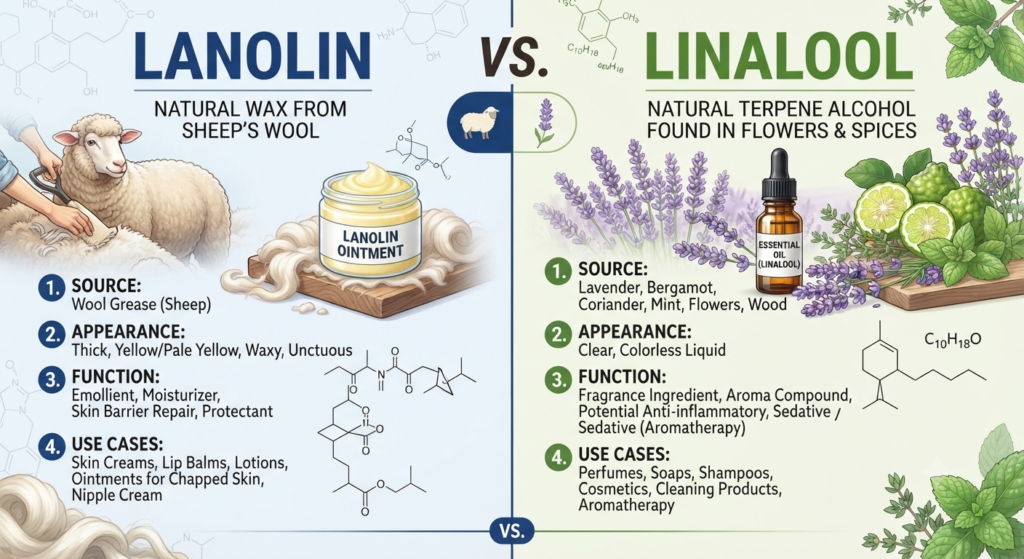
When comparing Lanolin vs. Linalool, it’s important to understand that these ingredients are completely different despite their similar names. Lanolin is a natural wax obtained from sheep’s wool and is widely used as a skin moisturizer and protective barrier. Linalool, on the other hand, is a naturally occurring fragrance compound found in many flowers, herbs, and essential oils. While lanolin mainly hydrates and protects the skin, linalool is primarily added to products for its pleasant floral scent and aromatic properties.
Understanding the difference between these two ingredients helps consumers choose skincare and cosmetic products that best suit their skin type and fragrance preferences.
Lanolin vs. Linalool: Comparison Table
The table below highlights the major differences between Lanolin and Linalool.
| Feature | Lanolin | Linalool |
| Source | Sheep’s wool (animal-derived) | Flowers, herbs, spices, and essential oils (plant-derived) |
| Type | Natural wax | Natural terpene alcohol |
| Chemical Formula | Complex mixture of wax esters | C₁₀H₁₈O |
| Primary Function | Moisturizer and skin protectant | Fragrance ingredient |
| Appearance | Yellowish wax | Colorless to pale yellow liquid |
| Smell | Mild waxy odor | Sweet floral scent |
| Used In | Creams, ointments, lip balms | Perfumes, soaps, shampoos, lotions |
| Moisturizing Ability | Excellent | Very low |
| Fragrance | Minimal | Strong floral aroma |
| Main Industry | Cosmetics and pharmaceuticals | Fragrance and personal care |
| Vegan Friendly | No | Usually yes (plant-derived) |
| Allergy Potential | Possible wool allergy | Possible fragrance allergy |
What Is Lanolin?
Lanolin is a naturally occurring wax secreted by the sebaceous glands of sheep. It coats the wool fibers and protects them from rain, wind, and harsh environmental conditions. After wool is harvested, lanolin is extracted, purified, and refined for commercial use.
Unlike ordinary fats, lanolin consists mainly of wax esters, sterols, fatty alcohols, and long-chain fatty acids, making it exceptionally effective at retaining moisture.
Characteristics of Lanolin
- Thick wax-like texture
- Yellow to amber color
- Highly moisturizing
- Water-resistant
- Excellent skin barrier protection
- Long-lasting hydration
Because of these properties, lanolin has become one of the most trusted ingredients for treating dry, cracked, and irritated skin.
Common Uses of Lanolin
Lanolin is widely used in:
- Moisturizing creams
- Lip balms
- Baby creams
- Nipple creams for breastfeeding mothers
- Hand creams
- Foot repair creams
- Healing ointments
- Medical dressings
- Leather conditioners
- Rust prevention products
What Is Linalool?
Linalool is a naturally occurring terpene alcohol found in more than 200 plant species. It is abundant in lavender, coriander, basil, mint, rosewood, bergamot, jasmine, and many citrus fruits.
Unlike lanolin, linalool is valued primarily for its pleasant floral fragrance rather than its moisturizing properties.
Its fresh aroma makes it one of the most widely used fragrance ingredients in cosmetics and household products.
Characteristics of Linalool
- Clear liquid
- Pleasant floral scent
- Naturally occurring in essential oils
- Highly volatile
- Lightweight
- Used mainly for fragrance
Linalool is also an important intermediate in producing vitamins, perfumes, and flavoring agents.
Common Uses of Linalool
Linalool is commonly found in:
- Perfumes
- Deodorants
- Shampoo
- Soap
- Body wash
- Skin lotions
- Essential oils
- Aromatherapy products
- Air fresheners
- Candles
- Cleaning products
Lanolin vs. Linalool: Key Differences
1. Source
One of the main differences in Lanolin vs. Linalool is their source of origin.
Lanolin is a natural wax derived from sheep’s wool. It is produced by the sebaceous glands of wool-bearing animals and coats the wool fibers to protect them from moisture, dirt, and harsh weather conditions. After sheep are sheared, the wool is cleaned, and the lanolin is extracted, purified, and refined for use in skincare products, cosmetics, pharmaceuticals, and other industrial applications. Since it is obtained from an animal source, lanolin is not considered vegan.
Linalool, on the other hand, is a naturally occurring terpene alcohol found in many flowers, herbs, spices, and essential oils. It is commonly present in plants such as lavender, coriander, basil, mint, bergamot, rosewood, and citrus fruits. Besides being extracted from natural plant sources, linalool can also be produced synthetically to ensure a consistent supply for the fragrance and cosmetic industries. Plant-derived linalool is commonly used in vegan and botanical formulations because of its natural origin.
2. Primary Purpose
Lanolin is mainly used as a moisturizing and skin-protecting ingredient. It forms a protective barrier on the skin that helps reduce moisture loss, keeping the skin soft, smooth, and hydrated. Because of its excellent emollient and occlusive properties, lanolin is commonly included in lip balms, hand creams, body lotions, nipple creams, healing ointments, and products designed for dry or cracked skin.
Linalool, in contrast, is primarily used as a fragrance ingredient. It provides a pleasant floral and slightly spicy aroma that enhances the scent of cosmetics, personal care products, and household items. Linalool is widely used in perfumes, shampoos, soaps, body washes, deodorants, candles, and air fresheners. In addition to its fragrance role, it is also used in some aromatherapy products because of its naturally calming scent.
3. Moisturizing Ability
Lanolin is an excellent moisturizer that helps prevent water loss from the skin. It forms a breathable protective barrier on the skin’s surface, locking in moisture and keeping the skin hydrated for longer periods. This makes lanolin particularly effective for treating dry, rough, chapped, or cracked skin. It is commonly used in moisturizing creams, lip balms, healing ointments, and products designed to restore the skin’s natural barrier.
Linalool, on the other hand, offers little to no moisturizing benefit. Its primary role is to provide a pleasant fragrance rather than hydrate the skin. While it may be present in moisturizers and lotions, linalool itself does not soften the skin or improve moisture retention. Any moisturizing effects come from other ingredients in the formulation, not from linalool.
4. Fragrance
Lanolin has a mild, natural waxy odor that is generally subtle and not considered a fragrance ingredient. Highly refined cosmetic-grade lanolin has very little scent, making it suitable for products where moisturizing performance is more important than fragrance. Manufacturers often add separate fragrances or essential oils if a scented product is desired.
Linalool, in contrast, is valued for its pleasant floral, slightly sweet, and fresh aroma. It occurs naturally in many essential oils, including lavender, coriander, bergamot, and rosewood, and is widely used to enhance the fragrance of perfumes, soaps, shampoos, lotions, deodorants, candles, and other personal care products. Its appealing scent is one of the main reasons it is included in cosmetic and household formulations.
5. Skin Protection
Lanolin is an effective skin protectant that helps strengthen the skin’s natural barrier. It forms a thin, breathable layer over the skin, reducing moisture loss while shielding it from wind, cold weather, and other environmental factors that can cause dryness and irritation. This protective action makes lanolin a common ingredient in healing ointments, barrier creams, lip balms, and products formulated for dry, cracked, or sensitive skin.
Linalool, on the other hand, provides little direct protection for the skin. Its primary purpose is to add fragrance rather than create a protective barrier or prevent moisture loss. Although linalool is naturally present in many essential oils and may contribute to the overall sensory experience of a product, it does not offer the same moisturizing or skin-protective benefits as lanolin. Skin protection in products containing linalool comes from other active ingredients rather than linalool itself.
6. Skin Sensitivity
Lanolin may trigger allergic reactions in people who are sensitive to wool or have a lanolin allergy. Although highly refined cosmetic-grade lanolin is less likely to cause irritation, some users may still experience redness, itching, or contact dermatitis. If you have very sensitive skin or a history of allergies, it’s a good idea to perform a patch test before using products containing lanolin.
Linalool can also cause skin sensitivity, especially after it has been exposed to air for a long time. As linalool oxidizes, it forms compounds that are more likely to trigger allergic reactions in sensitive individuals. This is why products containing linalool should be stored properly and used before their expiration date.
Overall, both lanolin and linalool are considered safe when used in approved cosmetic concentrations. However, people with sensitive skin or known allergies should check ingredient labels carefully and discontinue use if irritation develops.
7. Origin
Lanolin is animal-derived, as it is extracted from the wool of sheep after the shearing process. The wool is thoroughly cleaned and refined to obtain lanolin, which is then used in a variety of skincare, cosmetic, and pharmaceutical products. Because it comes from an animal source, lanolin is not suitable for vegan products.
Linalool, on the other hand, is primarily plant-derived. It occurs naturally in the essential oils of many flowers, herbs, spices, and citrus plants, including lavender, coriander, basil, and bergamot. Although linalool can also be manufactured synthetically for commercial use, its natural form comes from botanical sources, making it a common ingredient in many vegan and plant-based personal care products.
This difference in origin is an important consideration for consumers who prefer vegan, plant-based, or cruelty-free skincare and cosmetic products.
8. Industrial Applications
Another major difference in Lanolin vs. Linalool is the range of industries in which they are used.
Lanolin is valued for its moisturizing, protective, and water-resistant properties, making it useful in several industries. Its common applications include:
- Pharmaceuticals: Used in healing ointments, medicated creams, and skin protectants.
- Cosmetics and Skincare: Found in moisturizers, lip balms, hand creams, body lotions, and baby care products.
- Lubricants: Used as a natural lubricant for machinery and precision equipment.
- Leather Care: Helps condition, soften, and protect leather products from drying and cracking.
- Rust Protection: Applied as a protective coating to prevent corrosion on metal surfaces.
Linalool is primarily used for its pleasant floral fragrance and flavoring properties. It is widely used in:
- Perfumes and Fragrances: A key ingredient in perfumes, colognes, and body sprays.
- Personal Care Products: Added to soaps, shampoos, conditioners, lotions, and deodorants to enhance their scent.
- Cleaning Products: Used in detergents, fabric softeners, and household cleaners to provide a fresh fragrance.
- Aromatherapy: Included in essential oil blends because of its pleasant, relaxing aroma.
- Food and Beverage Flavorings: Used in small amounts as a flavoring agent to add floral or citrus notes to certain food and beverage products.
These different applications highlight that lanolin is primarily valued for its protective and moisturizing properties, whereas linalool is mainly appreciated for its fragrance and flavoring characteristics.
Advantages and Disadvantages of Lanolin and Linalool
Both lanolin and linalool offer unique benefits, but they also have certain limitations. Understanding their advantages and disadvantages can help you choose the right ingredient based on your skincare needs and personal preferences.
Lanolin Advantages
- Excellent Moisturizer: Deeply hydrates the skin and helps restore moisture to dry or rough areas.
- Prevents Moisture Loss: Forms a protective barrier that locks in moisture and reduces water evaporation from the skin.
- Supports Skin Repair: Helps soothe and protect cracked, chapped, or irritated skin while promoting healing.
- Long-Lasting Hydration: Provides extended moisturization, making it ideal for very dry skin and harsh weather conditions.
- Versatile Ingredient: Widely used in lip balms, hand creams, ointments, baby care products, and pharmaceutical creams.
Lanolin Disadvantages
- Not Vegan: Since lanolin is derived from sheep’s wool, it is not suitable for vegan products.
- May Cause Allergic Reactions: Some individuals with wool or lanolin allergies may experience skin irritation or contact dermatitis.
- Greasy Texture: Its rich, waxy consistency may feel heavy or greasy on oily or acne-prone skin.
- Animal-Derived Ingredient: Consumers seeking entirely plant-based skincare may prefer alternatives.
Linalool Advantages
- Pleasant Natural Fragrance: Provides a fresh, floral scent that enhances the appeal of cosmetic and personal care products.
- Plant-Derived: Naturally found in many flowers, herbs, spices, and essential oils.
- Common in Essential Oils: Present in popular oils such as lavender, coriander, basil, and bergamot.
- Popular in Aromatherapy: Its pleasant aroma makes it a common ingredient in aromatherapy and wellness products.
- Widely Used: Found in perfumes, soaps, shampoos, lotions, candles, and household cleaning products.
Linalool Disadvantages
- Does Not Moisturize: Unlike lanolin, linalool does not hydrate the skin or strengthen the skin barrier.
- May Cause Fragrance Sensitivity: Some people with fragrance allergies or sensitive skin may experience irritation.
- Oxidation Can Increase Irritation: When exposed to air over time, linalool can oxidize, producing compounds that are more likely to trigger allergic reactions in susceptible individuals.
- Limited Skincare Benefits: Its primary purpose is to provide fragrance rather than moisturize, protect, or repair the skin.
Which Is Better for Dry Skin?
Lanolin is significantly better for dry skin because it acts as an occlusive moisturizer that locks in water and strengthens the skin’s natural barrier. It is especially effective for severely dry, cracked, or chapped skin.
Linalool does not provide hydration and is included mainly for fragrance, so it is not a substitute for a moisturizer.
Which Is Better for Sensitive Skin?
The answer depends on the individual’s sensitivity.
- If you have a wool allergy, avoid lanolin-containing products.
- If you have fragrance sensitivity or perfume allergies, products containing linalool may be more likely to cause irritation.
A patch test is recommended before using products containing either ingredient if you have sensitive skin.
Conclusion
The comparison of Lanolin vs. Linalool shows that these ingredients have entirely different purposes in skincare and cosmetic products. Lanolin is a rich, natural moisturizer that helps protect and repair dry or damaged skin by reducing moisture loss. Linalool, in contrast, is a naturally occurring fragrance compound valued for its pleasant floral scent and widespread use in perfumes, soaps, shampoos, and other scented products.
If your priority is hydration and skin protection, lanolin is the better choice. If you’re looking for a pleasant fragrance in personal care products, linalool plays an important role. Knowing the distinction between these ingredients can help you select products that match your skincare needs and personal preferences.
Frequently Asked Questions (FAQs)
No. Lanolin is a moisturizing wax derived from sheep’s wool, while linalool is a fragrant terpene alcohol found in many plants and essential oils.
No. Lanolin is obtained from sheep’s wool and is therefore not considered vegan.
Yes, linalool is generally safe at the concentrations used in cosmetics. However, some people may develop irritation or allergic reactions, particularly if the ingredient has oxidized after prolonged exposure to air.
Lanolin creates a protective barrier that locks in moisture, making it highly effective for preventing and treating dry, chapped lips.
No. Linalool is primarily used as a fragrance ingredient and does not provide significant moisturizing benefits.
Reference:
1. “Linalool.” Science Direct,
Read Next: